
Details

Topic M

Modelling and Simulation

Step into the intricate world of modelling and simulation, a field that has witnessed exponential growth in its role within academic research and industrial applications. This topic serves as a vibrant platform for presenting and discussing the latest developments in connecting process nuances with the evolving properties of materials. Explore a spectrum of material modelling methods, with special emphasis on bridging scales and connecting insights across different material classes. This session promises a rich narrative, highlighting the pivotal role of simulations in shaping the future of materials science.

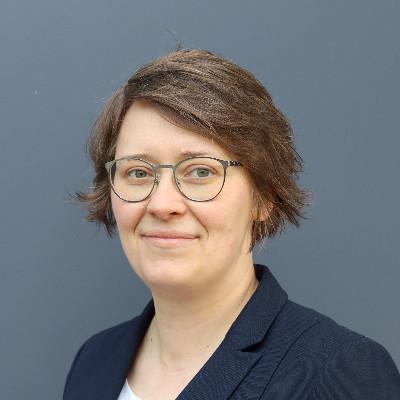
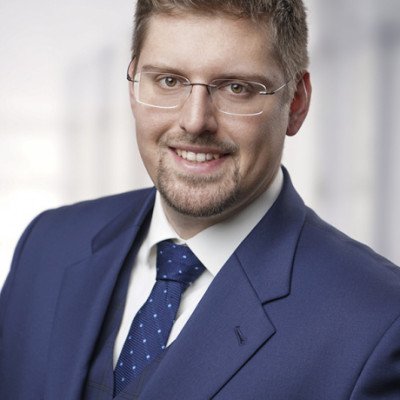
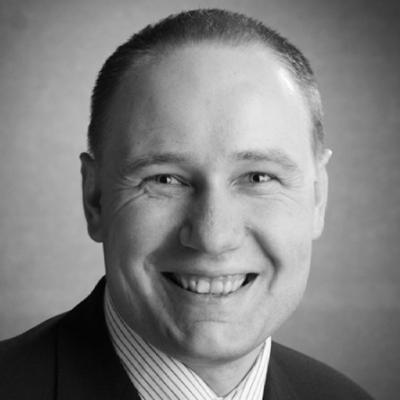
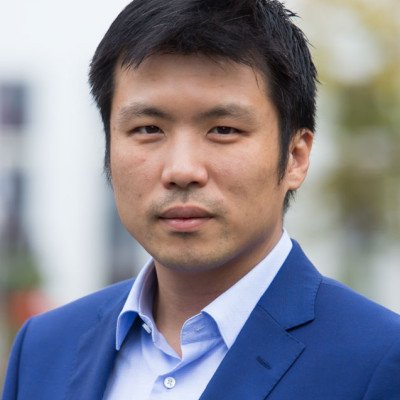
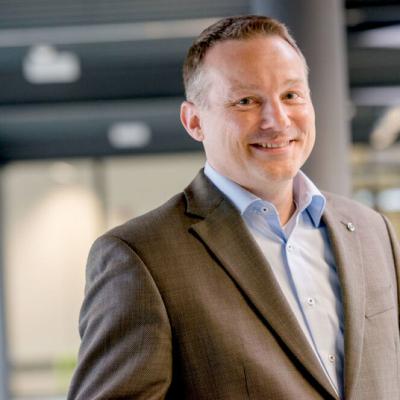
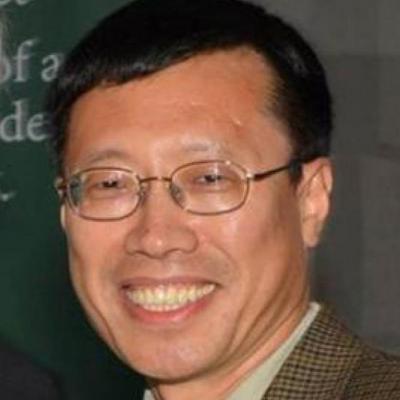
Topic Coordinators

Alexander Hartmaier

Prof. Dr.

Alexander Hartmaier

Ruhr University Bochum (DE)

Marco Salvalaglio

Prof. Dr.

Marco Salvalaglio

TU Dresden (DE)

Yunzhi Wang

Prof. Dr.

Yunzhi Wang

The Ohio State University (US)

Schedule Modelling and Simulation

29 Sep 2026

S1I03 - 121
10:10–11:40

M02.1: Thermodynamics of Intermetallics

Session Chairs: Prof. Dr. Andreas Leineweber

10:10 AM
10:25 AM

The Intermetallic Phases in the Fe-Al-Si System: Phase Equilibria, Crystal Structures, Plastic Deformability

Leineweber, A. (Speaker); Martin, S.; Meier, U.; Richter, L.

Lecture
10:25 AM
10:40 AM
Highlight Lecture

Unveiling Si's role in Laves phase dissolution in IN718 through experimentally guided molecular insights

Pati, D. (Speaker)

10:40 AM
10:55 AM

Mechanisms of invariant solid-state transformations in ternary Cu–Zn(–Al) alloys and binary AgAl diffusion couples

Möbius, J. (Speaker)¹; Martin, S.²; Lippmann, S.¹

Lecture
10:55 AM
11:10 AM

Coupled Effects of A‑Site Order, Vacancies, and Sr Diffusion in Na₀.₅Bi₀.₅TiO₃–SrTiO₃

Túnica, M. (Speaker); Meja, R.; Villa, L.; Albe, K.

Lecture
11:10 AM
11:25 AM

First-Principles Thermodynamics of Hydrogen Absorption in Binary C15 Laves Phases

Paetsch, C.A. (Speaker); Natarajan, A.R.

Lecture
11:25 AM
11:40 AM

Structural and thermodynamic stability in hexagonal-diamond Si1-x-yGexBy alloys

Túnica, M. (Speaker)¹; Chiodi, F.²; Amato, M.²

Lecture
13:25–14:40

M02.2: CalPhaD-based Modeling of Solidification

Session Chairs: PD Dr.-Ing. habil. Stephanie Lippmann

1:25 PM
1:40 PM

Development and application of advanced CALPHAD databases for High Entropy Alloys.

Jansson, A. (Speaker); Bratberg, J.; Jin, S.; Lancelot, C.M.; Mao, H.; Naraghi, R.; Schneider, A.; Xing, M.

Lecture
1:40 PM
1:55 PM

From dendritic to fine-grained: Solidification mechanisms in Inconel 718

Fang, Y. (Speaker); Galenko, P.; Kropotin, N.; Lippmann, S.

Lecture
1:55 PM
2:10 PM

A Predictive CALPHAD Framework for Intermetallic Phase Formation in Multi-Metal LPBF

Gupta, A. (Speaker)¹; Vanmeensel, K.²; Everaerts, J.²; Wauthle, R.¹; Moelans, N.²

Lecture
2:10 PM
2:25 PM

Modeling precipitation kinetics in additively manufactured Ni-based alloys using a CALPHAD-based approach

Aslam, A. (Speaker); Rodriguez, J.; Mayr, P.

Lecture
2:25 PM
2:40 PM

Modeling of solute-driven resolidification in Al-Cu alloys inspired by false-bottom ice formation in seawater

Nizovtseva, I. (Speaker)¹; Fang, Y.¹; Becker, M.²; Sondermann, E.²; Kargl, F.²; Lippmann, S.¹

Lecture
15:40–16:55

M02.3: CalPhaD-Database development

Session Chairs: Dr. Irina Roslyakova

3:40 PM
3:55 PM
Highlight Lecture

Computational Thermodynamics with ab-initio Accuracy

Chilakalapudi, P. (Speaker); Janssen, J.; Neugebauer, J.

3:55 PM
4:10 PM
Highlight Lecture

Data-driven study of the thermodynamics of substitutional metallic solutions

Deffrennes, G. (Speaker)¹; Bizot, Q.¹; Xie, R.¹; Abe, T.²; Crivello, J.-C.³; Fischer, E.¹; Hallstedt, B.⁴; Joubert, J.-M.⁵; Terayama, K.⁶; Tamura, R.²

4:10 PM
4:25 PM

XML-Enabled Data Handling in FactSage Calphad Optimizer version 3.0

Tang, F.; Reis, B.; Keuter, P. (Speaker); to Baben, M.

Lecture
4:25 PM
4:40 PM

Modelling and Simulation-Assisted Heat-Loss Calibration for Temperature-Gradient Measurements of Ag–33 wt.% Zn Alloy

Zhuo, J. (Speaker)¹; Walnsch, A.²; Kriegel, M.J.³; Lippmann, S.¹

Lecture
4:40 PM
4:55 PM

Generating Alloy Thermodynamic and Thermophysical Data Using CALPHAD

Schneider, A. (Speaker)¹; Chen, H.¹; Chen, Q.¹; Grundy, A.N.¹; Naraghi, R.¹; Wu, K.²

Lecture
17:10–18:25

M02.4: Thermodynamics of Interfaces and Defects

Session Chairs: Prof. Dr. Ernst Gamsjäger

5:10 PM
5:40 PM
Keynote Lecture

Stress induced nanohydride formation in Fe alloys

Hickel, T. (Speaker)¹; Neugebauer, J.²; Tehranchi, A.¹

5:40 PM
5:55 PM

Microstructural changes during tempering of a martensitic stainless steel – From experiments via modeling to materials properties

Gamsjäger, E. (Speaker)¹; Wiessner, M.²

Lecture
5:55 PM
6:10 PM

Temperature and Strain Rate Effects on Bainite Formation Kinetics in low-carbon Steels

Faraji, T. (Speaker); Zapf, M.; Korpala, G.; Prahl, U.

Lecture
6:10 PM
6:25 PM
Highlight Lecture

Atomic force microscopy reveals thermally induced grain growth via shear-coupled migration

Tang, J.¹; Kratzer, M.¹; Romaner, L.¹; Dake, J.²; Krill, C.²; Teichert, C.¹; Kapp, M.³; Renk, O. (Speaker)¹

30 Sep 2026

S1I03 - 121
10:10–11:55

M03.1: Phase-Field Benchmarks and Coupled Numerical Frameworks

Session Chairs: Daniel Schneider

10:10 AM
10:40 AM
Keynote Lecture

Multi-Phase-Field Modeling of Shear-Coupled Grain Growth in Polycrystals

Salvalaglio, M. (Speaker)

10:40 AM
10:55 AM

A Phase-Field Model for Anisotropic Abnormal Grain Growth in Ceramic Fibers: Linking Grain Boundary Chemistry and Kinetics

Kundin, J. (Speaker)¹; Younan, M.¹; Almeida, R.S.²

Lecture
10:55 AM
11:10 AM

Effect of coherency strain and interface orientation on NaxV2(PO4)3 phase transitions in sodium-ion batteries

Kuhn, P.B. (Speaker)¹; Daubner, S.²; Schneider, D.¹; Nestler, B.¹

Lecture
11:10 AM
11:25 AM

A Multiphase-Field Framework for Predictive Microstructure Evolution in LPBF Inconel 718 Under Heat Treatment

Bryndza, G. (Speaker); Sepúlveda, H.; Eloudrhiri, R.; Tchoufang Tchuindjang, J.; Mertens, A.; Habraken, A.M.; Duchêne, L.

Lecture
11:25 AM
11:40 AM

Modelling dynamic recrystallization in solid-state processing of lightweight alloys using a coupled phase-field and crystal plasticity framework

Nanayakkara, H. (Speaker); Chafle, R.; Klusemann, B.

Lecture
11:40 AM
11:55 AM

Prediction of static recrystallisation of Fe-Ni steel using phase field simulation

Tamanna, N. (Speaker)¹; Dastur, P.²; Davis, C.²; Slater, C.²

Lecture
13:25–15:10

M03.2: Grain Growth, Hydrogen Effects, and Defect Transport

Session Chairs: Daniel Schneider

1:25 PM
1:40 PM
Highlight Lecture

Breakup of anisotropic nanowires by surface diffusion : a phase-field study

Plapp, M. (Speaker)¹; Philippe, T.¹; Rospigliossi Georger, C.²

1:40 PM
1:55 PM
Highlight Lecture

Quantitative Phase-field modelling of grain-boundary trapping and transport for thermal desorption and permeation analysis of hydrogen

Feyen, V. (Speaker); Diehl, M.; Moelans, N.

1:55 PM
2:10 PM

A mathematical criterion for chunk formation in Mg–Ca alloy anodes based on phase-field modelling and experimental validation

Zhang, Y. (Speaker); Xu, W.; Wu, Y.; Ravikumar, A.; Snihirova, D.; Lamaka, S.V.; Zheludkevich, M.L.; Höche, D.

Lecture
2:10 PM
2:25 PM

Phase - Field Modeling of Pore Migration in Oxide Nuclear Fuels

Scapini, A. (Speaker)¹; Barani, T.¹; Introïni, C.¹; Le Tellier, R.¹; Plapp, M.²

Lecture
2:25 PM
2:40 PM

Multiphase-field modeling of non-isothermal polymer crystallization

Elmoghazy, A. (Speaker); Prahs, A.; Schneider, D.; Nestler, B.

Lecture
2:40 PM
2:55 PM

A diffuse-interface representation of a slip-gradient plasticity framework

Schneider, E.A. (Speaker)¹; Schöller, L.¹; Kannenberg, T.²; Schneider, D.¹; Prahs, A.¹; Nestler, B.¹

Lecture
2:55 PM
3:10 PM

Assessing diffuse boundary-condition models for fluid–solid interaction flows

Weichel, M. (Speaker)¹; Reder, M.²; Nestler, B.³; Schneider, D.¹

Lecture
15:40–16:40

M03.3: Application-Led Phase-Field Studies in Alloys and Energy Materials

Session Chairs: Dr. Andreas Prahs

3:40 PM
3:55 PM
Highlight Lecture

Variational phase field model for hydrogen-assisted cracking

Le Bouar, Y. (Speaker); Bouobda Moladje, G.F.; Finel, A.; Ruffini, A.

3:55 PM
4:10 PM

Phase-Field Simulation of Martensitic Transformations in Titanium Alloys under Finite deformation and High Driving Forces

Gao, X. (Speaker); Seefeldt, M.; Bönisch, M.; Moelans, N.

Lecture
4:10 PM
4:25 PM

An Impulse-Based Collision Model for Arbitrarily Shaped Rigid Bodies within a Phase-Field Framework

Li, T. (Speaker)¹; Reder, M.²; Schneider, D.¹; Nestler, B.¹

Lecture
4:25 PM
4:40 PM

Asymmetric Interfacial Energies in Tilted Lamellar Mo-Si-Ti Structures: A Multi-Phase-Field Study Analysis of Material Characteristics

Nourani Niaki, K. (Speaker); Nestler, B.; Wang, F.

Lecture
17:10–18:25

M05.1: Machine-Learned Potentials and Defect–Interface Energetics

Session Chairs: Dr. Mira Todorova

5:10 PM
5:25 PM

Assessing the Reliability of Interatomic Potentials for Nanomechanical Simulations

Anand, S. (Speaker); Janssen, J.; Neugebauer, J.; Bitzek, E.

Lecture
5:25 PM
5:40 PM

From Foundation Models to System-Specific Potentials: An Uncertainty-Guided Workflow for Studying Segregation in steel

Mohandas, N. (Speaker)¹; Liu, K.²; Echeverri Restrepo, S.³; Sluiter, M.¹

Lecture
5:40 PM
5:55 PM

Machine-Learning Solute-Defect Interactions From First-Principles

Somani, D. (Speaker); Natarajan, A.R.

Lecture
5:55 PM
6:10 PM

Bridging Atomistic and Phase-Field Modeling of Grain Boundaries

Wallis, T. (Speaker)¹; Ratanaphan, S.²; Darvishi Kamachali, R.¹

Lecture
6:10 PM
6:25 PM
Highlight Lecture

Multiscale Simulation of Directional Grain Boundary Migration

Salvalaglio, M. (Speaker)

S1I03 - 123
10:10–11:55

M06.1: Simulation and Machine Learning for Energy Materials

Session Chairs: Prof. Dr. Pascal Boulet

10:10 AM
10:25 AM
Highlight Lecture

High-Throughput CALPHAD Screening and Uncertainty-Aware Machine Learning for the Discovery of Phase Change Materials

Roslyakova, I. (Speaker); Walnsch, A.; Reis, B.; to Baben, M.; Keuter, P.

10:25 AM
10:40 AM

A data-driven, chemistry-informed workflow for semiconductor discovery in optoelectronic applications

Saleh, G. (Speaker); Manna, L.

Lecture
10:40 AM
10:55 AM

Machine-Learned Potential–Driven Insights into Li₂S–P₂S₅ Glass Electrolytes and Li₆PS₅Cl Interfacial Chemistry for Solid-State Batteries

Lee, B. (Speaker)

Lecture
10:55 AM
11:10 AM

Thermoelectric Performance Enhancement in PbSnTeSe High-Entropy Alloys by Magnetic Doping and Strain Engineering

Record, M.-C. (Speaker); Xia, M.; Boulet, P.

Lecture
11:10 AM
11:25 AM

Prediction of the functional behavior of lead-free perovskites for energy applications based on DFT and MD simulations

Scheiber, D.; Mayer, F.; Popov, M.N.; Spitaler, J. (Speaker)

Lecture
11:25 AM
11:40 AM

Integrating machine learning potential with a MD/QM strategy to investigate packing structures as well as electronic states for Ti nanoparticles on heating

Zhang, L. (Speaker); Liu, J.

Lecture
11:40 AM
11:55 AM

Modeling for Electronic and Energy Devices: From Precursor to Film

Choi, H. (Speaker)

Lecture
S1I03 - 113
10:25–12:10

M04.1: Uncertainty-Aware CPSP Data and Modeling Workflows

Session Chairs: Prof. Dr. Markus Kästner

10:25 AM
10:55 AM
Keynote Lecture

Data Fusion and Uncertainty Quantification for CPSP Linkages

Roslyakova, I. (Speaker)

10:55 AM
11:10 AM

Probabilistic Workflows for Ab Initio Design of Alloys

Moitzi, F. (Speaker); Hodapp, M.; Peil, O.; Razumovskiy, V.; Ruban, A.V.; Scheiber, D.; Schuscha, B.

Lecture
11:10 AM
11:25 AM

Trustworthy Deep Surrogates for Inverse Materials Design with Calibrated Uncertainty

Teh, H.M. (Speaker); Iraki, T.; Sandfeld, S.

Lecture
11:25 AM
11:40 AM

Data-Driven Knowledge Discovery Workflows Exemplified by Understanding the Mechanisms Governing Creep in γ-TiAl Alloys

Gupta, V. (Speaker); Paul, J.D.H.; Rackel, M.; Guru, M.K.; Klusemann, B.; Pyczak, F.

Lecture
11:40 AM
11:55 AM
Highlight Lecture

Uncertainty-Aware PSP Modeling of Dynamic Recrystallization and Flow Behavior in C43 Steel

Schuscha, B. (Speaker); Mayer, M.; Brescakovic, D.; Ressel, G.; Raninger, P.; Schreiber, D.

11:55 AM
12:10 PM

Probability Distribution Exchange Format for CPSP Modelling Chains

Mücke, M. (Speaker); Findenig, C.; Gratl, C.

Lecture
13:40–15:10

M04.2: Inverse Design and Microstructure–Mechanics Linkages

1:40 PM
1:55 PM

From Properties to Structure: Data-Driven Insights for Inverse Materials Design

Kästner, M. (Speaker); Otto, A.; Raßloff, A.; Rosenkranz, M.; Schneider, T.

Lecture
1:55 PM
2:10 PM
Highlight Lecture

Data-Driven Quantification and Tessellation-Based Modeling of Anisotropy in Polycrystalline Alloys

Schröder, L. (Speaker)¹; Aziz, U.²; Safi, A.³; Fuchs, L.¹; Suhuddin, U.³; Klusemann, B.²; Schmidt, V.¹

2:10 PM
2:25 PM

Structure-property linkages in recycled aluminum alloys: Bayesian optimization meets phase-field fracture modeling

Schneider, T. (Speaker)¹; Mohammed, W.²; Raabe, D.²; Kästner, M.¹

Lecture
2:25 PM
2:40 PM
Highlight Lecture

Machine learning plasticity model for nanoporous gold trained from atomistic data

Hartmaier, A. (Speaker)¹; Mathesan, S.²; Shoghi, R.¹; Mordehai, D.²

2:40 PM
2:55 PM

Fourier Neural Operator as a Surrogate Model for Crystal Plasticity Simulations

Ramalingam, A. (Speaker); Fehlemann, N.; Münstermann, S.

Lecture
2:55 PM
3:10 PM

Processing-Controlled Bainitic Microstructures and Their Yield Surfaces: Phase-Field Predictions Validated Experimentally

Nerella, D.K. (Speaker); Adil Ali, M.; Shchyglo, O.; Steinbach, I.

Lecture
15:40–16:55

M04.3: Data-Driven Design for Energy Materials, Polymers, and Devices

Session Chairs: Dr. Daniel Scheiber

3:40 PM
3:55 PM
Highlight Lecture

Data‑Driven Design and Prediction of Surface‑Modified Polymer Composite Membranes

Glass, S. (Speaker)¹; Abdul Latif, A.²; Filiz, V.³; Fischer, K.²; Friederich, P.⁴; Merten, P.³; Schmidt, M.²; Schulze, A.²

3:55 PM
4:10 PM

Machine Learning-Accelerated Discovery of Sustainable Redox-Active Polymers for Next-Generation Batteries

V.S.Ganti, S. (Speaker)¹; Wölfel, L.²; Diengdoh, A.²; Mihaylov, T.³; Nevolianis, T.³; Meyer, J.³; Künneth, C.⁴

Lecture
4:10 PM
4:25 PM

Optimizing non-oriented electrical steel for energy-efficient drives: linking final annealing, texture, and microstructure-based magnetic properties

Sistaninia, M. (Speaker)¹; Raninger, P.¹; Prevedel, P.¹; Kreuzer, H.²

Lecture
4:25 PM
4:40 PM

Revealing Structure-Property Relationships in Amorphous Boron Nitride Using Machine-Learning Interatomic Potentials

Kaya, O. (Speaker); Roche, S.

Lecture
4:40 PM
4:55 PM

A Workflow for Heterogeneous Packaging Optimisation of CMOS Optical Sensors by Data-Driven Analytics of Correlated SEM, AFM or Raman Microscopy

Avram, A. (Speaker); Kadar, M.; Bura, A.C.

Lecture

01 Oct 2026

S1I03 - 121
10:10–11:55

M05.2: Grain Boundary Segregation, Complexions, and Migration Mechanisms

Session Chairs: Prof. Dr. Pavel Korzhavyi

10:10 AM
10:25 AM
Highlight Lecture

Inverse Grain Boundary Segregation: the First Experimental Evidence

Lejcek, P. (Speaker)¹; Romaner, L.²; Scheiber, D.³; Strakošová, A.¹; Tsurekawa, S.⁴; Čapek, J.¹

10:25 AM
10:55 AM
Keynote Lecture

CALPHAD-integrated Modelling of Segregation–Induced Grain Boundary Premelting

Wallis, T. (Speaker); Darvishi Kamachali, R.

10:55 AM
11:10 AM

Chemical ordering by grain boundary motion

Nag, S. (Speaker)¹; Albe, K.²; Hickel, T.¹

Lecture
11:10 AM
11:25 AM

Atomic-scale structure-property correlation for shear-coupled grain boundary migration in FCC aluminum

Barik, R.¹; Berbenni, S.²; Barrales, L. (Speaker)¹

Lecture
11:25 AM
11:40 AM

Temperature and composition dependent grain boundary structure and properties in binary Al-based alloys

Trybula, M. (Speaker); Żydek, A.

Lecture
11:40 AM
11:55 AM

Multiscale Modelling of Hydrogen - Microstructure Interactions for Microstructural Design in Aluminium

Ganesan Sekar, B.G. (Speaker)¹; Tehranchi, A.¹; Nag, S.¹; Warnken, N.²; Hickel, T.¹

Lecture
13:25–14:55

M05.3: Functional and Meso-Scale Interfaces: Mechanics, Corrosion, and Energy Materials

Session Chairs: Prof. Marcela Trybula

1:25 PM
1:40 PM

Atomistic-to-Continuum Framework for Interface-Dominated Mechanical Behaviour in Hierarchical Polycrystalline Aragonite

Kvashin, N. (Speaker); Wolfram, U.

Lecture
1:40 PM
1:55 PM

Meso-Scale Finite Element Analysis of Cement Matrix–Aggregate Interface for Kriging-Based Metamodeling

Vievers, Y. (Speaker); Schnellenbach-Held, M.

Lecture
1:55 PM
2:10 PM

Hydrogen-Based Reduction of Iron Oxide Surfaces Studied by Ab-Initio Calculations

Abdelkawy, A. (Speaker); Neugebauer, J.; Todorova, M.

Lecture
2:10 PM
2:25 PM

Atomistic Modelling of Organic/Metal Interfaces

Żydek, A. (Speaker)¹; Korzhavyi, P.A.²; Marchewka, J.³; Mitoraj-Królikowska, M.³; Szafrański, P.⁴; Trybuła, M.E.¹

Lecture
2:25 PM
2:40 PM

Atomistic Interaction at the Interface Between Li$_6$PS$_5$Cl and Li Metal in Solid State Batteries

Jaykhedkar, N. (Speaker); George, J.

Lecture
2:40 PM
2:55 PM

The Effect of Intrinsic Defects in Grain Boundaries on Non- Radiative Recombination in CsPbI3 and CsPbBr3

Kortstee, L.; Garcia Lastra, J.M.; Castelli, I.E. (Speaker)

Lecture
S1I03 - 113
10:25–11:40

M01.1: Defects and Microstructure: Atomistics to Dislocation-Scale Modeling

Session Chairs: Prof. Dr. Marco Salvalaglio

10:25 AM
10:40 AM

First-principles investigation of alloying effects on stacking fault energies and lattice constants of γ′′-Ni3Nb: A comprehensive study

Hasan, A. (Speaker); Biswal, S.; Chakrabarti, D.; Paliwal, M.

Lecture
10:40 AM
10:55 AM

An atomistic and discrete dislocation dynamics approach to precipitation strengthening via η-Ni3Ti precipitates in maraging steels

Biswal, S. (Speaker)¹; Hasan, A.¹; Barik, R.K.²; Bakshi, A.¹; Dutta, A.¹; Chakrabarti, D.¹

Lecture
10:55 AM
11:10 AM

Graph representations of dislocation networks

Lathiya, G. (Speaker); Stricker, M.

Lecture
11:10 AM
11:25 AM

A Method for Graph-Based Analysis of Swept Areas of Dislocations

Yansri, N. (Speaker); Stricker, M.

Lecture
11:25 AM
11:40 AM

Variational Model of Dislocations, Cracks and Their Interplay

Ruffini, A. (Speaker); Engrand, G.; Le Bouar, Y.; Finel, A.

Lecture
13:40–14:55

M01.2: Constitutive, Process, and Interface Simulation With Data-Driven Calibration

1:40 PM
1:55 PM

A Machine Learning Constitutive Model for Cyclic Plasticity

Shoghi, R. (Speaker); Hartmaier, A.

Lecture
1:55 PM
2:10 PM

Informed Model Updating Through Identifiability Classes

Vintache, A. (Speaker)¹; Mathieu, F.¹; Gras, R.¹; Hild, F.²

Lecture
2:10 PM
2:25 PM

Simulation-Based Study of a Potential Upscaling of Equal Channel Angular Pressing for Titanium Alloys

Bisterfeld, F. (Speaker)¹; Kassner, S.¹; Katrakova-Krüger, D.¹; Witulski, T.²; Muckelbauer, M.²; Köbrich, M.²; Pöstges, S.³

Lecture
2:25 PM
2:40 PM

Thermo-Mechanical Simulation of Metal–Polymer Interfaces in Additively Manufactured Hybrid Electronics

Zheng, Y. (Speaker)¹; Kahn, Z.²; Shu, Z.²; Glatzel, U.³; Daoud, H.¹

Lecture
2:40 PM
2:55 PM

Finite Element–Based Constitutive Modelling of Hot Deformation Behaviour in Nickel-Based Superalloy IN600

Kumar, A. (Speaker); Shekhar, S.

Lecture
  • Symposium

    M01: Shaping Reality: The New Age of Modelling & Simulation in Material Science - General Symposium Topic M

    In an age where virtual realities shape tangible outcomes, modeling and simulation methods are more crucial than ever. Our symposium offers a deep dive into the role these methods play in both academic research and industrial applications. Engage in intricate discussions on the nexus between processing, microstructure evolution, thermodynamics, and material properties. With exhaustive coverage of everything from metals, ceramics, and glasses to polymers and composites, we promise a holistic exploration of the material world through the lens of simulation.

    Symposium Organizers

    Alexander Hartmaier

    Prof. Dr.

    Alexander Hartmaier

    Ruhr University Bochum (DE)

    Marco Salvalaglio

    Prof. Dr.

    Marco Salvalaglio

    TU Dresden (DE)

    Yunzhi Wang

    Prof. Dr.

    Yunzhi Wang

    The Ohio State University (US)

    Schedule M01: Shaping Reality: The New Age of Modelling & Simulation in Material Science - General Symposium Topic M

    01 Oct 2026

    S1I03 - 113
    10:25–11:40

    M01.1: Defects and Microstructure: Atomistics to Dislocation-Scale Modeling

    Session Chairs: Prof. Dr. Marco Salvalaglio

    10:25 AM
    10:40 AM

    First-principles investigation of alloying effects on stacking fault energies and lattice constants of γ′′-Ni3Nb: A comprehensive study

    Hasan, A. (Speaker); Biswal, S.; Chakrabarti, D.; Paliwal, M.

    Lecture
    10:40 AM
    10:55 AM

    An atomistic and discrete dislocation dynamics approach to precipitation strengthening via η-Ni3Ti precipitates in maraging steels

    Biswal, S. (Speaker)¹; Hasan, A.¹; Barik, R.K.²; Bakshi, A.¹; Dutta, A.¹; Chakrabarti, D.¹

    Lecture
    10:55 AM
    11:10 AM

    Graph representations of dislocation networks

    Lathiya, G. (Speaker); Stricker, M.

    Lecture
    11:10 AM
    11:25 AM

    A Method for Graph-Based Analysis of Swept Areas of Dislocations

    Yansri, N. (Speaker); Stricker, M.

    Lecture
    11:25 AM
    11:40 AM

    Variational Model of Dislocations, Cracks and Their Interplay

    Ruffini, A. (Speaker); Engrand, G.; Le Bouar, Y.; Finel, A.

    Lecture
    13:40–14:55

    M01.2: Constitutive, Process, and Interface Simulation With Data-Driven Calibration

    1:40 PM
    1:55 PM

    A Machine Learning Constitutive Model for Cyclic Plasticity

    Shoghi, R. (Speaker); Hartmaier, A.

    Lecture
    1:55 PM
    2:10 PM

    Informed Model Updating Through Identifiability Classes

    Vintache, A. (Speaker)¹; Mathieu, F.¹; Gras, R.¹; Hild, F.²

    Lecture
    2:10 PM
    2:25 PM

    Simulation-Based Study of a Potential Upscaling of Equal Channel Angular Pressing for Titanium Alloys

    Bisterfeld, F. (Speaker)¹; Kassner, S.¹; Katrakova-Krüger, D.¹; Witulski, T.²; Muckelbauer, M.²; Köbrich, M.²; Pöstges, S.³

    Lecture
    2:25 PM
    2:40 PM

    Thermo-Mechanical Simulation of Metal–Polymer Interfaces in Additively Manufactured Hybrid Electronics

    Zheng, Y. (Speaker)¹; Kahn, Z.²; Shu, Z.²; Glatzel, U.³; Daoud, H.¹

    Lecture
    2:40 PM
    2:55 PM

    Finite Element–Based Constitutive Modelling of Hot Deformation Behaviour in Nickel-Based Superalloy IN600

    Kumar, A. (Speaker); Shekhar, S.

    Lecture
  • Symposium

    M02: Computational and Experimental Thermodynamics and Kinetics of Materials

    The symposium provides a platform for discussing the thermodynamics and kinetics of materials. The focus is on the constitution of materials and the modelling of phase transformations, aiming to provide fundamental understanding of microstructure formation and offer new information for materials design and applications in the perspective of material scientists, metallurgists, physicists and engineers.

    Specifically encouraged are computational contributions on CALPHAD-type kinetic and thermodynamic databases (incl. 3rd generation) using classical expert evaluation, first-principle, Monte-Carlo and data-driven methods that allow the derivation of stable, metastable, kinetic and defect phase diagrams as well as contributions on modelling approaches with sharp and diffuse interface at the micro- and meso-scale considering solution phase thermodynamics, near-equilibrium and non-equilibrium states at the interface (rapid transformations).

    Microstructural investigation of phase equilibria and pattern formation employing, e.g., X-ray diffraction, high-resolution microscopy as well as experimental results using dilatometry and calorimetry are highly welcome.

    Materials of interest are metals and ceramics, respectively. However, applications related to composites, soft matter and biological materials are welcome to explore synergetic approaches. Theory and applications of thermodynamics and kinetics to describe “materials behavior in engineering systems”, e.g., for energy storage and conversion or for circular economy are also in the scope of this symposium.

    Symposium Organizers

    Ernst Gamsjäger

    Prof. Dr.

    Ernst Gamsjäger

    Montanuniversität Leoben (AT)

    David Henriques

    Dr.-Ing.

    David Henriques

    Technical University of Applied Sciences Mannheim (DE)

    Andreas Leineweber

    Prof. Dr.

    Andreas Leineweber

    TU Bergakademie Freiberg (DE)

    Stephanie Lippmann

    PD Dr.-Ing. habil.

    Stephanie Lippmann

    Friedrich Schiller University Jena (DE)

    Irina Roslyakova

    Dr.

    Irina Roslyakova

    GTT-Technologies (DE)

    Schedule M02: Computational and Experimental Thermodynamics and Kinetics of Materials

    29 Sep 2026

    S1I03 - 121
    10:10–11:40

    M02.1: Thermodynamics of Intermetallics

    Session Chairs: Prof. Dr. Andreas Leineweber

    10:10 AM
    10:25 AM

    The Intermetallic Phases in the Fe-Al-Si System: Phase Equilibria, Crystal Structures, Plastic Deformability

    Leineweber, A. (Speaker); Martin, S.; Meier, U.; Richter, L.

    Lecture
    10:25 AM
    10:40 AM
    Highlight Lecture

    Unveiling Si's role in Laves phase dissolution in IN718 through experimentally guided molecular insights

    Pati, D. (Speaker)

    10:40 AM
    10:55 AM

    Mechanisms of invariant solid-state transformations in ternary Cu–Zn(–Al) alloys and binary AgAl diffusion couples

    Möbius, J. (Speaker)¹; Martin, S.²; Lippmann, S.¹

    Lecture
    10:55 AM
    11:10 AM

    Coupled Effects of A‑Site Order, Vacancies, and Sr Diffusion in Na₀.₅Bi₀.₅TiO₃–SrTiO₃

    Túnica, M. (Speaker); Meja, R.; Villa, L.; Albe, K.

    Lecture
    11:10 AM
    11:25 AM

    First-Principles Thermodynamics of Hydrogen Absorption in Binary C15 Laves Phases

    Paetsch, C.A. (Speaker); Natarajan, A.R.

    Lecture
    11:25 AM
    11:40 AM

    Structural and thermodynamic stability in hexagonal-diamond Si1-x-yGexBy alloys

    Túnica, M. (Speaker)¹; Chiodi, F.²; Amato, M.²

    Lecture
    13:25–14:40

    M02.2: CalPhaD-based Modeling of Solidification

    Session Chairs: PD Dr.-Ing. habil. Stephanie Lippmann

    1:25 PM
    1:40 PM

    Development and application of advanced CALPHAD databases for High Entropy Alloys.

    Jansson, A. (Speaker); Bratberg, J.; Jin, S.; Lancelot, C.M.; Mao, H.; Naraghi, R.; Schneider, A.; Xing, M.

    Lecture
    1:40 PM
    1:55 PM

    From dendritic to fine-grained: Solidification mechanisms in Inconel 718

    Fang, Y. (Speaker); Galenko, P.; Kropotin, N.; Lippmann, S.

    Lecture
    1:55 PM
    2:10 PM

    A Predictive CALPHAD Framework for Intermetallic Phase Formation in Multi-Metal LPBF

    Gupta, A. (Speaker)¹; Vanmeensel, K.²; Everaerts, J.²; Wauthle, R.¹; Moelans, N.²

    Lecture
    2:10 PM
    2:25 PM

    Modeling precipitation kinetics in additively manufactured Ni-based alloys using a CALPHAD-based approach

    Aslam, A. (Speaker); Rodriguez, J.; Mayr, P.

    Lecture
    2:25 PM
    2:40 PM

    Modeling of solute-driven resolidification in Al-Cu alloys inspired by false-bottom ice formation in seawater

    Nizovtseva, I. (Speaker)¹; Fang, Y.¹; Becker, M.²; Sondermann, E.²; Kargl, F.²; Lippmann, S.¹

    Lecture
    15:40–16:55

    M02.3: CalPhaD-Database development

    Session Chairs: Dr. Irina Roslyakova

    3:40 PM
    3:55 PM
    Highlight Lecture

    Computational Thermodynamics with ab-initio Accuracy

    Chilakalapudi, P. (Speaker); Janssen, J.; Neugebauer, J.

    3:55 PM
    4:10 PM
    Highlight Lecture

    Data-driven study of the thermodynamics of substitutional metallic solutions

    Deffrennes, G. (Speaker)¹; Bizot, Q.¹; Xie, R.¹; Abe, T.²; Crivello, J.-C.³; Fischer, E.¹; Hallstedt, B.⁴; Joubert, J.-M.⁵; Terayama, K.⁶; Tamura, R.²

    4:10 PM
    4:25 PM

    XML-Enabled Data Handling in FactSage Calphad Optimizer version 3.0

    Tang, F.; Reis, B.; Keuter, P. (Speaker); to Baben, M.

    Lecture
    4:25 PM
    4:40 PM

    Modelling and Simulation-Assisted Heat-Loss Calibration for Temperature-Gradient Measurements of Ag–33 wt.% Zn Alloy

    Zhuo, J. (Speaker)¹; Walnsch, A.²; Kriegel, M.J.³; Lippmann, S.¹

    Lecture
    4:40 PM
    4:55 PM

    Generating Alloy Thermodynamic and Thermophysical Data Using CALPHAD

    Schneider, A. (Speaker)¹; Chen, H.¹; Chen, Q.¹; Grundy, A.N.¹; Naraghi, R.¹; Wu, K.²

    Lecture
    17:10–18:25

    M02.4: Thermodynamics of Interfaces and Defects

    Session Chairs: Prof. Dr. Ernst Gamsjäger

    5:10 PM
    5:40 PM
    Keynote Lecture

    Stress induced nanohydride formation in Fe alloys

    Hickel, T. (Speaker)¹; Neugebauer, J.²; Tehranchi, A.¹

    5:40 PM
    5:55 PM

    Microstructural changes during tempering of a martensitic stainless steel – From experiments via modeling to materials properties

    Gamsjäger, E. (Speaker)¹; Wiessner, M.²

    Lecture
    5:55 PM
    6:10 PM

    Temperature and Strain Rate Effects on Bainite Formation Kinetics in low-carbon Steels

    Faraji, T. (Speaker); Zapf, M.; Korpala, G.; Prahl, U.

    Lecture
    6:10 PM
    6:25 PM
    Highlight Lecture

    Atomic force microscopy reveals thermally induced grain growth via shear-coupled migration

    Tang, J.¹; Kratzer, M.¹; Romaner, L.¹; Dake, J.²; Krill, C.²; Teichert, C.¹; Kapp, M.³; Renk, O. (Speaker)¹

  • Symposium

    M03: Phase Field Modelling: Analysis & Benchmarks

    The development of modern materials requires the incorporation of advanced materials modelling and simulation techniques. Computer-aided design of innovative materials through combined material simulations, operating on different scales and involving multiple physical phenomena, enables accelerated design of materials that are specialized for individual processes and applications. In particular, numerical methods based on the phase-field method have become indispensable and extremely versatile tools in materials science, microstructure mechanics and physics. The method typically operates at the mesoscopic length scale and provides important information about morphological changes in materials by mapping interfacial motions of physically separated regions. Diffuse interface parameterization can be used to model the temporal and spatial evolution of an arbitrarily complex multi-phase, multi-component and polycrystalline microstructure in materials without the need for additional assumptions about shape or mutual distribution. An outstanding feature of the phase-field method is the ability to consider different physical driving forces for interfacial motion due to diffusive, electrochemical, thermomechanical, etc. processes. In addition, large-scale numerical simulations can be performed by numerically solving the coupled multiphysics differential equations on high performance clusters. Because of this versatility, phase-field methods, used in a wide range of fields in materials science and physics, are constantly under development. To establish cross-community standards for phase-field modelling, this MSE2026 symposium aims to address following main objectives:
     

    • Highlight current issues, emerging applications, and outstanding perspectives in phase field modelling
    • Identify methodological commonalities between the different phase-field communities
    • Discuss analytical challenges of phase-field modelling in a transparent way
    • Establish benchmarks for the verification of models and implementations

    Symposium Organizers

    Yann Le Bouar

    Dr.-Ing.

    Yann Le Bouar

    CNRS/ONERA (FR)

    Britta Nestler

    Prof. Dr.

    Britta Nestler

    Karlsruhe Institute of Technology (KIT) (DE)

    Andreas Prahs

    Dr.

    Andreas Prahs

    Karlsruhe Institute of Technology (KIT) (DE)

    Daniel Schneider

    Daniel Schneider

    Karlsruhe Institute of Technology (KIT) (DE)

    Schedule M03: Phase Field Modelling: Analysis & Benchmarks

    30 Sep 2026

    S1I03 - 121
    10:10–11:55

    M03.1: Phase-Field Benchmarks and Coupled Numerical Frameworks

    Session Chairs: Daniel Schneider

    10:10 AM
    10:40 AM
    Keynote Lecture

    Multi-Phase-Field Modeling of Shear-Coupled Grain Growth in Polycrystals

    Salvalaglio, M. (Speaker)

    10:40 AM
    10:55 AM

    A Phase-Field Model for Anisotropic Abnormal Grain Growth in Ceramic Fibers: Linking Grain Boundary Chemistry and Kinetics

    Kundin, J. (Speaker)¹; Younan, M.¹; Almeida, R.S.²

    Lecture
    10:55 AM
    11:10 AM

    Effect of coherency strain and interface orientation on NaxV2(PO4)3 phase transitions in sodium-ion batteries

    Kuhn, P.B. (Speaker)¹; Daubner, S.²; Schneider, D.¹; Nestler, B.¹

    Lecture
    11:10 AM
    11:25 AM

    A Multiphase-Field Framework for Predictive Microstructure Evolution in LPBF Inconel 718 Under Heat Treatment

    Bryndza, G. (Speaker); Sepúlveda, H.; Eloudrhiri, R.; Tchoufang Tchuindjang, J.; Mertens, A.; Habraken, A.M.; Duchêne, L.

    Lecture
    11:25 AM
    11:40 AM

    Modelling dynamic recrystallization in solid-state processing of lightweight alloys using a coupled phase-field and crystal plasticity framework

    Nanayakkara, H. (Speaker); Chafle, R.; Klusemann, B.

    Lecture
    11:40 AM
    11:55 AM

    Prediction of static recrystallisation of Fe-Ni steel using phase field simulation

    Tamanna, N. (Speaker)¹; Dastur, P.²; Davis, C.²; Slater, C.²

    Lecture
    13:25–15:10

    M03.2: Grain Growth, Hydrogen Effects, and Defect Transport

    Session Chairs: Daniel Schneider

    1:25 PM
    1:40 PM
    Highlight Lecture

    Breakup of anisotropic nanowires by surface diffusion : a phase-field study

    Plapp, M. (Speaker)¹; Philippe, T.¹; Rospigliossi Georger, C.²

    1:40 PM
    1:55 PM
    Highlight Lecture

    Quantitative Phase-field modelling of grain-boundary trapping and transport for thermal desorption and permeation analysis of hydrogen

    Feyen, V. (Speaker); Diehl, M.; Moelans, N.

    1:55 PM
    2:10 PM

    A mathematical criterion for chunk formation in Mg–Ca alloy anodes based on phase-field modelling and experimental validation

    Zhang, Y. (Speaker); Xu, W.; Wu, Y.; Ravikumar, A.; Snihirova, D.; Lamaka, S.V.; Zheludkevich, M.L.; Höche, D.

    Lecture
    2:10 PM
    2:25 PM

    Phase - Field Modeling of Pore Migration in Oxide Nuclear Fuels

    Scapini, A. (Speaker)¹; Barani, T.¹; Introïni, C.¹; Le Tellier, R.¹; Plapp, M.²

    Lecture
    2:25 PM
    2:40 PM

    Multiphase-field modeling of non-isothermal polymer crystallization

    Elmoghazy, A. (Speaker); Prahs, A.; Schneider, D.; Nestler, B.

    Lecture
    2:40 PM
    2:55 PM

    A diffuse-interface representation of a slip-gradient plasticity framework

    Schneider, E.A. (Speaker)¹; Schöller, L.¹; Kannenberg, T.²; Schneider, D.¹; Prahs, A.¹; Nestler, B.¹

    Lecture
    2:55 PM
    3:10 PM

    Assessing diffuse boundary-condition models for fluid–solid interaction flows

    Weichel, M. (Speaker)¹; Reder, M.²; Nestler, B.³; Schneider, D.¹

    Lecture
    15:40–16:40

    M03.3: Application-Led Phase-Field Studies in Alloys and Energy Materials

    Session Chairs: Dr. Andreas Prahs

    3:40 PM
    3:55 PM
    Highlight Lecture

    Variational phase field model for hydrogen-assisted cracking

    Le Bouar, Y. (Speaker); Bouobda Moladje, G.F.; Finel, A.; Ruffini, A.

    3:55 PM
    4:10 PM

    Phase-Field Simulation of Martensitic Transformations in Titanium Alloys under Finite deformation and High Driving Forces

    Gao, X. (Speaker); Seefeldt, M.; Bönisch, M.; Moelans, N.

    Lecture
    4:10 PM
    4:25 PM

    An Impulse-Based Collision Model for Arbitrarily Shaped Rigid Bodies within a Phase-Field Framework

    Li, T. (Speaker)¹; Reder, M.²; Schneider, D.¹; Nestler, B.¹

    Lecture
    4:25 PM
    4:40 PM

    Asymmetric Interfacial Energies in Tilted Lamellar Mo-Si-Ti Structures: A Multi-Phase-Field Study Analysis of Material Characteristics

    Nourani Niaki, K. (Speaker); Nestler, B.; Wang, F.

    Lecture
  • Symposium

    M04: Data-Driven Exploration of CPSP (=Composition-Processing-Structure-Properties) Linkages and Materials Design

    The twin challenges of sustainability and digital transformation are redefining the landscape of materials modeling and design. As traditional experimental methods struggle to keep pace with the vast range of chemical components and process parameters, data-driven methodologies offer a compelling alternative. By merging physics-based insights with advanced statistical, machine, and deep learning techniques, these approaches provide a powerful framework to decode the complex links between composition, processing, structure, and properties (CPSP).

    This symposium, “Data-driven exploration of CPSP linkages and materials design,” will spotlight innovative strategies that harness the full potential of integrated experimental and simulation data. Emphasis will be placed on hybrid models that combine conventional Integrated Computational Materials Engineering (ICME) with cutting-edge data analytics, enabling rapid prediction of material properties, process optimization, and tailored chemical compositions under real-world constraints. Moreover, data-driven exploration of CPSP linkages offers unique opportunities to bridge mechanics and materials science, fostering a holistic understanding of material behavior and structural performance.

    Key Topics of Interest

    • High-Throughput Data Preprocessing: Utilizing advanced statistical, deep, and active learning techniques to efficiently clean, structure, and analyze large-scale experimental and simulation datasets.
    • Hybrid Modeling and Data Fusion: Merging diverse data sources to improve model accuracy while reducing experimental demands.
    • Uncertainty Quantification: Systematically addressing inherent data variability to enhance the reliability of model predictions.
    • Accelerated Process Simulation: Applying state-of-the-art computational methods to forecast microstructural evolution and processing outcomes.
    • Advanced Microstructure Analysis: Leveraging 2D/3D imaging techniques and computer vision, including deep learning, for comprehensive microstructural characterization.
    • Dimensionality Reduction and Feature Extraction: Developing robust strategies to establish and explore CPSP linkages.
    • Adaptive and Multi-Objective Optimization: Leveraging sequential adaptive learning loops and multi-objective optimization techniques for efficient alloy design.
    • High-Performance Data Management: Innovating research data systems to support extensive materials investigations.

    By uniting expertise from academia and industry, the symposium seeks to bridge traditional materials science with modern data analytics — paving the way for next-generation materials engineered for a sustainable and digitally advanced future.

    Symposium Organizers

    Felix Fritzen

    Prof. Dr.-Ing.

    Felix Fritzen

    University of Stuttgart (DE)

    Benjamin Klusemann

    Prof. Dr.

    Benjamin Klusemann

    Helmholtz-Zentrum hereon GmbH (DE)

    Markus Kästner

    Prof. Dr.

    Markus Kästner

    TU Dresden (DE)

    Manfred Mücke

    Dr.

    Manfred Mücke

    Materials Center Leoben Forschung GmbH (AT)

    Irina Roslyakova

    Dr.

    Irina Roslyakova

    GTT-Technologies (DE)

    Daniel Scheiber

    Dr.

    Daniel Scheiber

    Materials Center Leoben Forschung GmbH (AT)

    Schedule M04: Data-Driven Exploration of CPSP (=Composition-Processing-Structure-Properties) Linkages and Materials Design

    30 Sep 2026

    S1I03 - 113
    10:25–12:10

    M04.1: Uncertainty-Aware CPSP Data and Modeling Workflows

    Session Chairs: Prof. Dr. Markus Kästner

    10:25 AM
    10:55 AM
    Keynote Lecture

    Data Fusion and Uncertainty Quantification for CPSP Linkages

    Roslyakova, I. (Speaker)

    10:55 AM
    11:10 AM

    Probabilistic Workflows for Ab Initio Design of Alloys

    Moitzi, F. (Speaker); Hodapp, M.; Peil, O.; Razumovskiy, V.; Ruban, A.V.; Scheiber, D.; Schuscha, B.

    Lecture
    11:10 AM
    11:25 AM

    Trustworthy Deep Surrogates for Inverse Materials Design with Calibrated Uncertainty

    Teh, H.M. (Speaker); Iraki, T.; Sandfeld, S.

    Lecture
    11:25 AM
    11:40 AM

    Data-Driven Knowledge Discovery Workflows Exemplified by Understanding the Mechanisms Governing Creep in γ-TiAl Alloys

    Gupta, V. (Speaker); Paul, J.D.H.; Rackel, M.; Guru, M.K.; Klusemann, B.; Pyczak, F.

    Lecture
    11:40 AM
    11:55 AM
    Highlight Lecture

    Uncertainty-Aware PSP Modeling of Dynamic Recrystallization and Flow Behavior in C43 Steel

    Schuscha, B. (Speaker); Mayer, M.; Brescakovic, D.; Ressel, G.; Raninger, P.; Schreiber, D.

    11:55 AM
    12:10 PM

    Probability Distribution Exchange Format for CPSP Modelling Chains

    Mücke, M. (Speaker); Findenig, C.; Gratl, C.

    Lecture
    13:40–15:10

    M04.2: Inverse Design and Microstructure–Mechanics Linkages

    1:40 PM
    1:55 PM

    From Properties to Structure: Data-Driven Insights for Inverse Materials Design

    Kästner, M. (Speaker); Otto, A.; Raßloff, A.; Rosenkranz, M.; Schneider, T.

    Lecture
    1:55 PM
    2:10 PM
    Highlight Lecture

    Data-Driven Quantification and Tessellation-Based Modeling of Anisotropy in Polycrystalline Alloys

    Schröder, L. (Speaker)¹; Aziz, U.²; Safi, A.³; Fuchs, L.¹; Suhuddin, U.³; Klusemann, B.²; Schmidt, V.¹

    2:10 PM
    2:25 PM

    Structure-property linkages in recycled aluminum alloys: Bayesian optimization meets phase-field fracture modeling

    Schneider, T. (Speaker)¹; Mohammed, W.²; Raabe, D.²; Kästner, M.¹

    Lecture
    2:25 PM
    2:40 PM
    Highlight Lecture

    Machine learning plasticity model for nanoporous gold trained from atomistic data

    Hartmaier, A. (Speaker)¹; Mathesan, S.²; Shoghi, R.¹; Mordehai, D.²

    2:40 PM
    2:55 PM

    Fourier Neural Operator as a Surrogate Model for Crystal Plasticity Simulations

    Ramalingam, A. (Speaker); Fehlemann, N.; Münstermann, S.

    Lecture
    2:55 PM
    3:10 PM

    Processing-Controlled Bainitic Microstructures and Their Yield Surfaces: Phase-Field Predictions Validated Experimentally

    Nerella, D.K. (Speaker); Adil Ali, M.; Shchyglo, O.; Steinbach, I.

    Lecture
    15:40–16:55

    M04.3: Data-Driven Design for Energy Materials, Polymers, and Devices

    Session Chairs: Dr. Daniel Scheiber

    3:40 PM
    3:55 PM
    Highlight Lecture

    Data‑Driven Design and Prediction of Surface‑Modified Polymer Composite Membranes

    Glass, S. (Speaker)¹; Abdul Latif, A.²; Filiz, V.³; Fischer, K.²; Friederich, P.⁴; Merten, P.³; Schmidt, M.²; Schulze, A.²

    3:55 PM
    4:10 PM

    Machine Learning-Accelerated Discovery of Sustainable Redox-Active Polymers for Next-Generation Batteries

    V.S.Ganti, S. (Speaker)¹; Wölfel, L.²; Diengdoh, A.²; Mihaylov, T.³; Nevolianis, T.³; Meyer, J.³; Künneth, C.⁴

    Lecture
    4:10 PM
    4:25 PM

    Optimizing non-oriented electrical steel for energy-efficient drives: linking final annealing, texture, and microstructure-based magnetic properties

    Sistaninia, M. (Speaker)¹; Raninger, P.¹; Prevedel, P.¹; Kreuzer, H.²

    Lecture
    4:25 PM
    4:40 PM

    Revealing Structure-Property Relationships in Amorphous Boron Nitride Using Machine-Learning Interatomic Potentials

    Kaya, O. (Speaker); Roche, S.

    Lecture
    4:40 PM
    4:55 PM

    A Workflow for Heterogeneous Packaging Optimisation of CMOS Optical Sensors by Data-Driven Analytics of Correlated SEM, AFM or Raman Microscopy

    Avram, A. (Speaker); Kadar, M.; Bura, A.C.

    Lecture
  • Symposium

    M05: Interfaces in Advanced Materials: From Atomistic – To Meso-Scale

    Grain boundaries and other interfaces exert a significant influence on the mechanical, physical, and chemical properties of polycrystalline materials. For better understanding of the complex structures and phenomena occurring at interfaces in materials during their manufacturing and service, it is essential to combine atomistic simulations with meso-scale and continuum modelling, as well as to employ machine learning approaches for uncovering the composition-structure property relationships.

    The purpose of this symposium is to explore and discuss state-of-the-art applications of theoretical and computational tools that enable reliable simulations of grain boundaries and other interfaces in realistically complex materials and their properties. Multi-scale and gap-bridging approaches that seek to bring together theoretical and experimental results are of particular importance. Also of significance is the application of physics-informed machine learning (ML) techniques as well as CALPHAD-integrated studies that can capture the underlying physics and make high-fidelity predictions on interface energetics and other quantities of interest. The focus areas of computational studies include the broad microstructure evolution phenomena as in segregation phenomena, precipitate-matrix interactions, intermetallic compounds and generalized stacking fault energies, embrittlement phenomena, grain growth and recrystallization.

    We warmly invite all contributions on the structure, dynamics, and thermodynamics of interfaces, as well as on their role in the property formation and evolution in metals, alloys, ceramics, multi-layered and composite materials. Symposium contributions on the implementation of ML schemes and automated or high-throughput approaches to address fundamental questions in interface properties are also welcomed.

    Symposium Organizers

    Pavel Korzhavyi

    Dr.

    Pavel Korzhavyi

    Royal Institute of Technology (KTH) (SE)

    Anjana Talapatra

    Anjana Talapatra

    Los Alamos National Laboratory (US)

    Mira Todorova

    Dr.

    Mira Todorova

    Max Planck Institute for Sustainable Materials (DE)

    Marcela Trybula

    Dr.

    Marcela Trybula

    Polish Academy of Sciences (PL)

    Schedule M05: Interfaces in Advanced Materials: From Atomistic – To Meso-Scale

    30 Sep 2026

    S1I03 - 121
    17:10–18:25

    M05.1: Machine-Learned Potentials and Defect–Interface Energetics

    Session Chairs: Dr. Mira Todorova

    5:10 PM
    5:25 PM

    Assessing the Reliability of Interatomic Potentials for Nanomechanical Simulations

    Anand, S. (Speaker); Janssen, J.; Neugebauer, J.; Bitzek, E.

    Lecture
    5:25 PM
    5:40 PM

    From Foundation Models to System-Specific Potentials: An Uncertainty-Guided Workflow for Studying Segregation in steel

    Mohandas, N. (Speaker)¹; Liu, K.²; Echeverri Restrepo, S.³; Sluiter, M.¹

    Lecture
    5:40 PM
    5:55 PM

    Machine-Learning Solute-Defect Interactions From First-Principles

    Somani, D. (Speaker); Natarajan, A.R.

    Lecture
    5:55 PM
    6:10 PM

    Bridging Atomistic and Phase-Field Modeling of Grain Boundaries

    Wallis, T. (Speaker)¹; Ratanaphan, S.²; Darvishi Kamachali, R.¹

    Lecture
    6:10 PM
    6:25 PM
    Highlight Lecture

    Multiscale Simulation of Directional Grain Boundary Migration

    Salvalaglio, M. (Speaker)

    01 Oct 2026

    S1I03 - 121
    10:10–11:55

    M05.2: Grain Boundary Segregation, Complexions, and Migration Mechanisms

    Session Chairs: Prof. Dr. Pavel Korzhavyi

    10:10 AM
    10:25 AM
    Highlight Lecture

    Inverse Grain Boundary Segregation: the First Experimental Evidence

    Lejcek, P. (Speaker)¹; Romaner, L.²; Scheiber, D.³; Strakošová, A.¹; Tsurekawa, S.⁴; Čapek, J.¹

    10:25 AM
    10:55 AM
    Keynote Lecture

    CALPHAD-integrated Modelling of Segregation–Induced Grain Boundary Premelting

    Wallis, T. (Speaker); Darvishi Kamachali, R.

    10:55 AM
    11:10 AM

    Chemical ordering by grain boundary motion

    Nag, S. (Speaker)¹; Albe, K.²; Hickel, T.¹

    Lecture
    11:10 AM
    11:25 AM

    Atomic-scale structure-property correlation for shear-coupled grain boundary migration in FCC aluminum

    Barik, R.¹; Berbenni, S.²; Barrales, L. (Speaker)¹

    Lecture
    11:25 AM
    11:40 AM

    Temperature and composition dependent grain boundary structure and properties in binary Al-based alloys

    Trybula, M. (Speaker); Żydek, A.

    Lecture
    11:40 AM
    11:55 AM

    Multiscale Modelling of Hydrogen - Microstructure Interactions for Microstructural Design in Aluminium

    Ganesan Sekar, B.G. (Speaker)¹; Tehranchi, A.¹; Nag, S.¹; Warnken, N.²; Hickel, T.¹

    Lecture
    13:25–14:55

    M05.3: Functional and Meso-Scale Interfaces: Mechanics, Corrosion, and Energy Materials

    Session Chairs: Prof. Marcela Trybula

    1:25 PM
    1:40 PM

    Atomistic-to-Continuum Framework for Interface-Dominated Mechanical Behaviour in Hierarchical Polycrystalline Aragonite

    Kvashin, N. (Speaker); Wolfram, U.

    Lecture
    1:40 PM
    1:55 PM

    Meso-Scale Finite Element Analysis of Cement Matrix–Aggregate Interface for Kriging-Based Metamodeling

    Vievers, Y. (Speaker); Schnellenbach-Held, M.

    Lecture
    1:55 PM
    2:10 PM

    Hydrogen-Based Reduction of Iron Oxide Surfaces Studied by Ab-Initio Calculations

    Abdelkawy, A. (Speaker); Neugebauer, J.; Todorova, M.

    Lecture
    2:10 PM
    2:25 PM

    Atomistic Modelling of Organic/Metal Interfaces

    Żydek, A. (Speaker)¹; Korzhavyi, P.A.²; Marchewka, J.³; Mitoraj-Królikowska, M.³; Szafrański, P.⁴; Trybuła, M.E.¹

    Lecture
    2:25 PM
    2:40 PM

    Atomistic Interaction at the Interface Between Li$_6$PS$_5$Cl and Li Metal in Solid State Batteries

    Jaykhedkar, N. (Speaker); George, J.

    Lecture
    2:40 PM
    2:55 PM

    The Effect of Intrinsic Defects in Grain Boundaries on Non- Radiative Recombination in CsPbI3 and CsPbBr3

    Kortstee, L.; Garcia Lastra, J.M.; Castelli, I.E. (Speaker)

    Lecture
  • Symposium

    M06: Energy and Environmental Materials Science Driven by Computer Simulations and Machine Learning

    The development of advanced materials for energy and environmental applications is vital to achieving a sustainable future. While renewable energy technologies continue to evolve, there is also a growing need for materials that address environmental issues such as pollution, water purification, and waste management.

    Traditional trial-and-error methods in materials development are often slow and costly. To accelerate discovery, researchers now combine simulations—such as DFT, molecular dynamics, and finite element analysis—with machine learning (ML). ML enables high-throughput screening, property prediction, and inverse design, offering a powerful complement to conventional modeling.
    In environmental research, ML has been applied to optimize materials like biochar for pollutant removal and heavy metal remediation, demonstrating the potential of data-driven methods in real-world applications.

    This symposium welcomes contributions on the use of simulations and ML in designing and studying materials for energy and environmental purposes, with a focus on theory–experiment integration and cross-disciplinary approaches.

    Topics include:

    • Modeling methods for energy and environmental materials
    • High-throughput computational screening
    • Machine learning for property prediction and materials design
    • Mechanisms of energy conversion and pollutant remediation
    • Integration of experimental and computational approaches

    Symposium Organizers

    Pascal Boulet

    Dr.

    Pascal Boulet

    Aix-Marseille University (FR)

    Heechae Choi

    Prof. Dr.

    Heechae Choi

    Xi'an Jiaotong-Liverpool University (CN)

    Marie-Christine Record

    Prof. Dr.

    Marie-Christine Record

    Aix-Marseille University (FR)

    Schedule M06: Energy and Environmental Materials Science Driven by Computer Simulations and Machine Learning

    30 Sep 2026

    S1I03 - 123
    10:10–11:55

    M06.1: Simulation and Machine Learning for Energy Materials

    Session Chairs: Prof. Dr. Pascal Boulet

    10:10 AM
    10:25 AM
    Highlight Lecture

    High-Throughput CALPHAD Screening and Uncertainty-Aware Machine Learning for the Discovery of Phase Change Materials

    Roslyakova, I. (Speaker); Walnsch, A.; Reis, B.; to Baben, M.; Keuter, P.

    10:25 AM
    10:40 AM

    A data-driven, chemistry-informed workflow for semiconductor discovery in optoelectronic applications

    Saleh, G. (Speaker); Manna, L.

    Lecture
    10:40 AM
    10:55 AM

    Machine-Learned Potential–Driven Insights into Li₂S–P₂S₅ Glass Electrolytes and Li₆PS₅Cl Interfacial Chemistry for Solid-State Batteries

    Lee, B. (Speaker)

    Lecture
    10:55 AM
    11:10 AM

    Thermoelectric Performance Enhancement in PbSnTeSe High-Entropy Alloys by Magnetic Doping and Strain Engineering

    Record, M.-C. (Speaker); Xia, M.; Boulet, P.

    Lecture
    11:10 AM
    11:25 AM

    Prediction of the functional behavior of lead-free perovskites for energy applications based on DFT and MD simulations

    Scheiber, D.; Mayer, F.; Popov, M.N.; Spitaler, J. (Speaker)

    Lecture
    11:25 AM
    11:40 AM

    Integrating machine learning potential with a MD/QM strategy to investigate packing structures as well as electronic states for Ti nanoparticles on heating

    Zhang, L. (Speaker); Liu, J.

    Lecture
    11:40 AM
    11:55 AM

    Modeling for Electronic and Energy Devices: From Precursor to Film

    Choi, H. (Speaker)

    Lecture

MSE 2026
29 September - 01 October 2026 | Hybrid Congress in Darmstadt (Germany) & Online