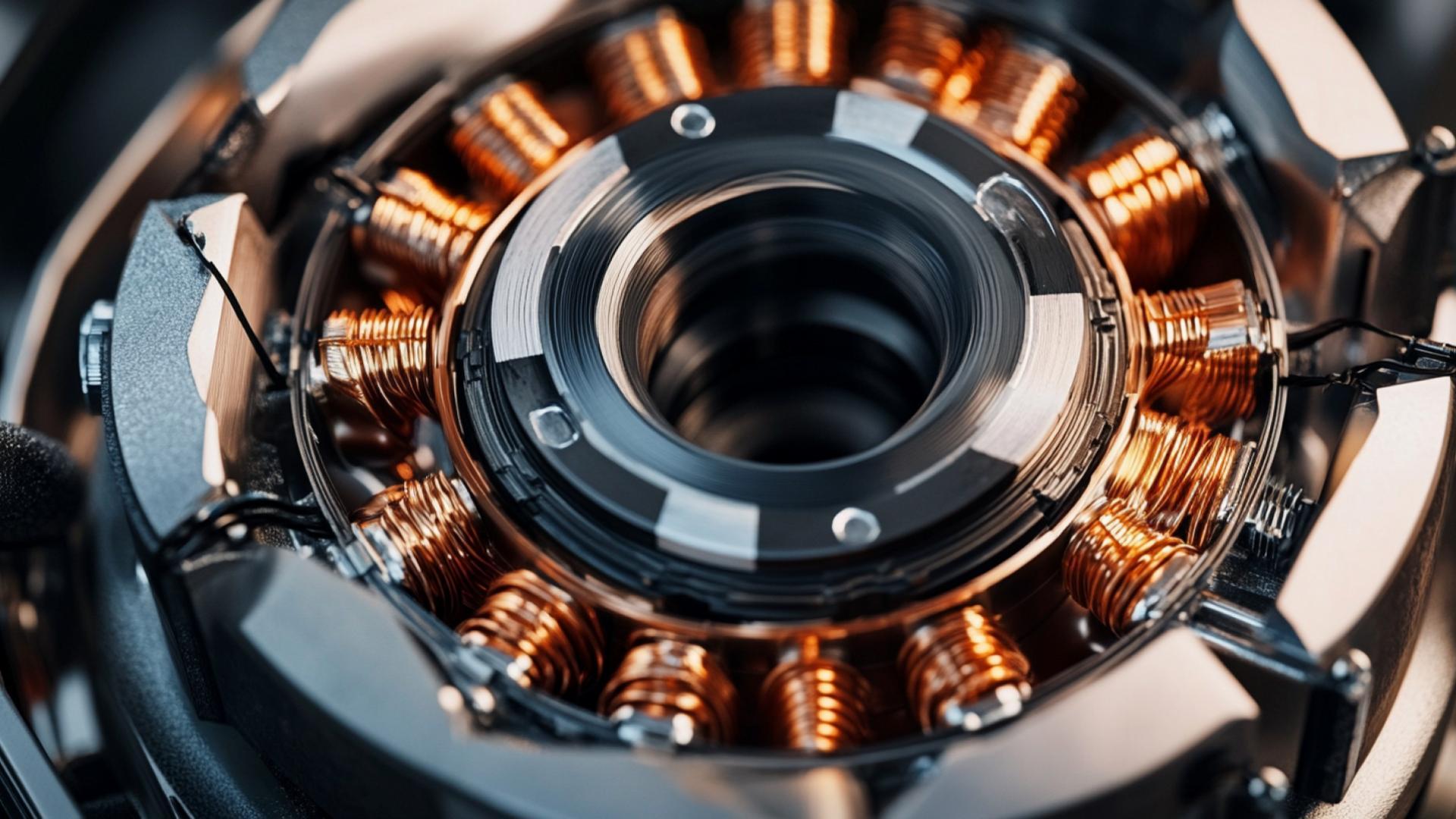
This training course provides in-depth knowledge of modern magnetic materials, their physical fundamentals, manufacturing, and applications. It covers both permanent and soft magnets, addressing their properties, requirements, and typical fields of use. Participants will gain a solid understanding of the key relationships between material structure and magnetic behavior and will receive an overview of current materials, manufacturing processes, and trends – for example in the areas of sintered magnets, electrical steel sheets, or additively manufactured components. Topics such as raw material availability, recycling, and sustainability are addressed alongside quality assurance, material analysis, and the targeted selection of suitable magnets for specific applications. The course is rounded off with practical insights into laboratories and production processes.
Magnetic materials, due to their key role in advanced applications such as wind generators and electromobility, are indispensable for progress in renewable energy technologies and sustainable transportation solutions.
Here are some reasons why your company will benefit from deeper knowledge in this field:
Fundamental understanding: Gain insights into different magnet types and magnetic properties that are crucial for their functionality.
Manufacturing processes: Learn more about synthesis methods and the resulting properties of hard and soft magnetic materials.
Analytics and measurement: Develop the ability to analyze the microstructure of your magnetic materials and correlate it with their properties.
Quality and recycling: Assess and ensure the quality of your magnetic materials and explore approaches to recycling.
Market knowledge: Understand market developments and raw material requirements for magnetic materials.
Latest technologies and innovations: Stay informed about key technologies driving renewable energy and sustainable mobility.
Discuss your specific practical applications or challenges with experts.
Take this opportunity to advance your company technologically and secure a competitive edge!
At the beginning, the relevance, areas of application and requirements for strong magnets are summarized in an overview. This is done for permanent magnets and soft magnets alike. Maps (property assignments, assignments over time) are used for clear visualization. For use in applications, market development, raw material requirements and criticality of the required raw materials must be kept in mind. Many materials are subject to a field of tension here, where the major challenge is to make suitable compromises.
14:00 – 15:00
Lecture
Physical principles of magnetic materials
In order to better understand magnetic materials and their properties, it is important to understand the basics of ferromagnetism. Magnetism can be traced back to the electrons in atoms. The ferromagnetic order of magnetic moments takes place within magnetic domains (Weiss domains) and is the cause of the hysteresis loop and the resulting magnetic parameters. Current materials and alternatives for permanent magnets and soft magnets are examined.
15:00
Coffee Break
15:30 – 16:30
Lecture
Permanent magnets: Metallurgical basics of sintered magnets
Rare earth magnets are usually installed as sintered magnets. Participants learn to better understand the metallurgical fundamentals of sintered magnets. The manufacturing process requires basic knowledge in the field of powder metallurgy and sintering technology, including subsequent heat treatment. In addition to constitution and crystal structure, the focus is on phase diagram and microstructure formation, and the addition of advantageous additives for specific microstructure-property correlations. The materials considered are FeNdB and CoSm.
Prof. Dr. rer. nat. Gerhard SchneiderAalen University of Applied Sciences
16:30 – 17:30
Lecture
Material analysis/measurement technology, quality, magnet selection
Methods for microstructural analysis (including crystal structure) and analysis of magnetic parameters and other functional properties (electrical, mechanical, corrosive properties) are presented. Participants learn how microstructure details and properties are related. Existing discontinuities allow statements to be made about the process quality and the service life of the magnets. It is shown how the correct optimized magnet selection can be made for a specific application (magnetic circuit).
The counterpart of rare earth magnets for permanent magnets is electrical steel for soft magnets. Participants learn about the material science fundamentals of electrical steel and the influence of chemical composition and manufacturing parameters on microstructure, physical properties and magnetic losses. Material alternatives (such as soft magnetic composites) or newer developments (such as two-phase sheets) or possibilities that arise with new technologies such as additive manufacturing for the production of magnetic components are presented.
10:00
Coffee Break
10:30 – 12:00
Lecture
Permanent magnets special processes
Special processes that are highlighted for sintered magnets are the GBD process, segmentation and magnetization of the magnets. In addition to the sintering process, there are other processes that offer advantages for special applications: Polymer bonded magnets (fusion spinning, HDDR), hot pressed magnets, MIM and extruded magnets. It is presented how the magnets can be selected for their use in the application depending on the manufacturing process. This also includes reading the relevant data sheets and safe handling of the magnets.
12:00 – 13:00
Lecture
Production chain/supply chain (large-scale) and recycling
After all, secure production chains and supply chains are important for magnetic materials. It is also increasingly important to use recycled materials and to be prepared for the efficient recycling of disused electrical machines and the valuable materials they contain, including magnetic materials. Participants will learn what current production chains and supply chains and the associated CO2 footprint look like and where the greatest dependencies lie. An overview of possible recycling processes will also be given and the design of the magnetic materials in the electrical machines will be addressed to ensure the most efficient recycling possible after the machine has been decommissioned so that the recyclable materials are kept in the cycle.
This training course is particularly suitable for:
Technicians working in quality control, laboratories, materials testing, or field testing who wish to apply the knowledge directly in their practical work.
Individuals with a technical background who are active in the fields of magnetic materials, renewable energies, mobility, or related areas and who would benefit from a materials-focused training.
Managers and sales representatives with a technical background working in this or related fields who would benefit from a materials-focused training.
Scientists as well as engineers and technicians engaged in research and development, industrial production, process, and quality control.
Organizational matters
Die Teilnahmegebühren werden Ende Oktober 2026 veröffentlicht. Ab diesem Zeitpunkt ist auch die Anmeldung möglich. Bei Interesse an einer Teilnahme können Sie uns bereits jetzt unter akademiedgm.de kontaktieren.
Directions
The event will take place at the
Hochschule Pforzheim Zentrum für Präzisionstechnik Tiefenbronner Straße 58 75175 Pforzheim
Travel sustainably and comfortably: In cooperation with Deutsche Bahn, the DGM offers a special event ticket at discounted rates. The ticket allows you to travel on all long-distance trains using 100% green electricity. The link to the event ticket will be displayed directly after booking. It is also available at any time in your personal user account.