
All at a glance · All training courses offered by the DGM Academy 2025 and 2026 in one PDF

Download
Stay informed:
Sign up to receive news and updates about the event X-ray techniques for materials development and process control.
Invalid email
This appointment is in the past. Select the upcoming event.
Training Course

X-ray techniques for materials development and process control

Non-destructive insights for advanced materials and processes

The event is in the past
Online
English
Certificate upon completion

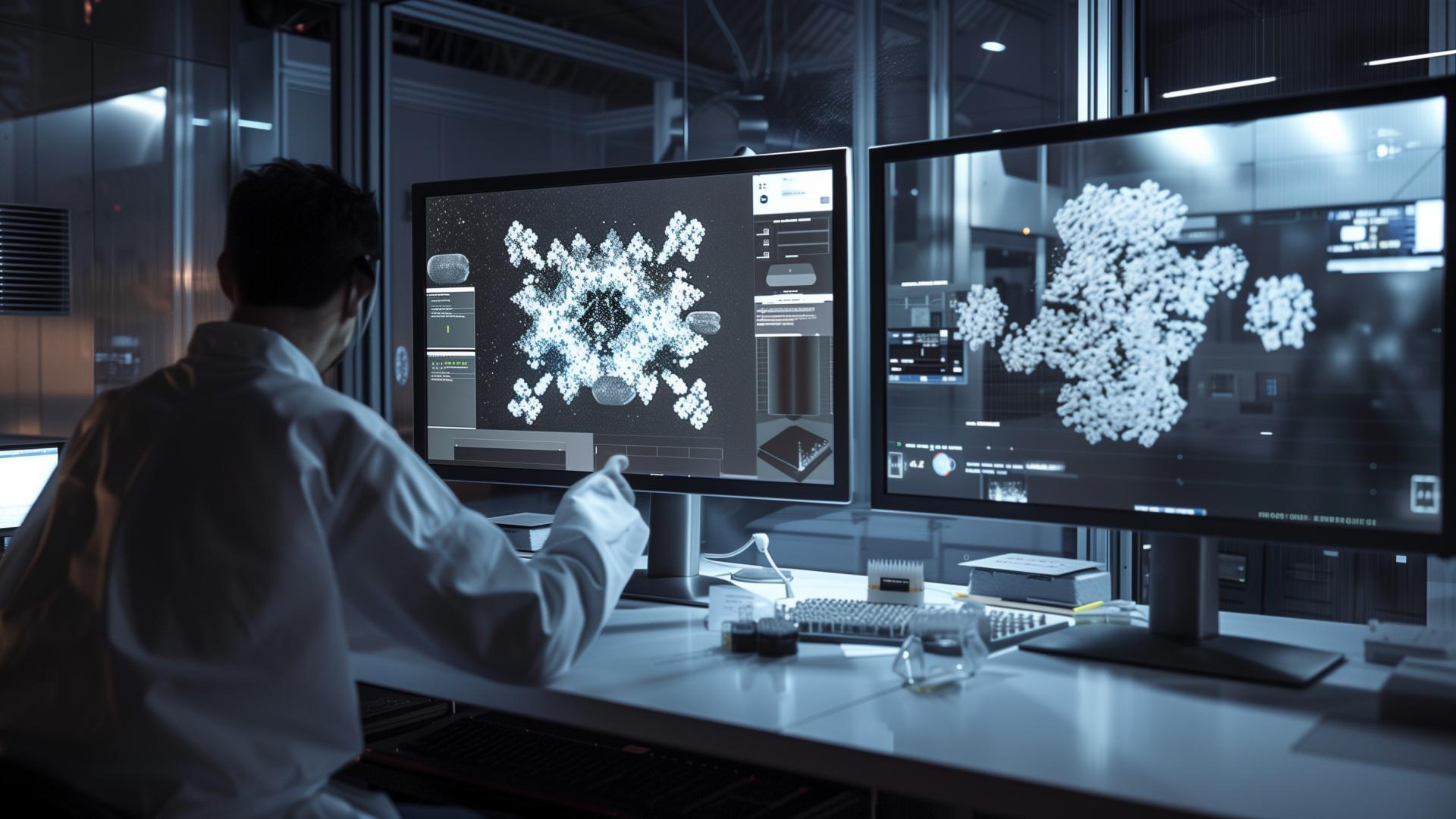
Understanding materials from the macroscopic down to the atomic scale is essential for developing high-performance products and enabling robust and efficient production processes. Modern X-ray techniques provide a powerful, reliable, and non-destructive way to analyze materials. This training course provides a compact, application-oriented introduction to X-ray techniques at the laboratory scale and beyond, covering material structure, composition, and microstructural features can be efficiently characterized across all length scales. Emphasis is placed on X-ray microscopy and tomography, diffraction and spectroscopy, and how these methods provide advanced insights that support materials development and process control. New approaches to data analysis will also be covered, including AI algorithms. Participants will gain a solid, application-oriented foundation in X-ray physics and learn how to optimize experimental setups, particularly in the selection and use of X-ray tools.


Training Chair

  • Prof. Dr. Ehrenfried Zschech
    Brandenburg University of Technology (BTU) Cottbus-Senftenberg

Lecturer

  • Prof. Dr. Ingo Flege
    Brandenburg University of Technology (BTU) Cottbus-Senftenberg
  • Dr. Jörg Grenzer
    Helmholtz-Zentrum Dresden-Rossendorf
    CV
  • Dr. rer. nat. Kristina Kutukova
    PVA Technology Hub GmbH
    CV
  • Prof. Dr. David Rafaja
    TU Bergakademie Freiberg
  • Dr. Roald Tagle
    Bruker Nano GmbH
    CV
  • Dr. Janis Timoshenko
    Fritz-Haber-Institut der Max-Planck-Gesellschaft
    CV
Program

22 Sep 2025 (Mon)

09:00
Lecture
Welcome and Introduction: Fundamentals of X-ray physics

The Introduction and Program Overview provides participants with an overview of the content and structure of the training. A round of introductions encourages participants to get to know each other and share ideas during the session. It also allows participants to express their goals and expectations at the beginning of the training. 

The course begins with a compact introduction to the fundamentals of X-ray physics. You will learn how X-rays are generated, their key properties, and how they interact with matter – an essential basis for all subsequent applications.

  • Prof. Dr. Ehrenfried Zschech
    Brandenburg University of Technology (BTU) Cottbus-Senftenberg
10:45
Break
Break
11:15
Lecture
X-ray experiments: Laboratory sources vs. synchrotron
Which X-ray source suits your research question? This session explains the differences between laboratory and synchrotron sources, highlighting their strengths, limitations, and typical applications – giving you practical decision-making support.
  • Dr. Jörg Grenzer
    Helmholtz-Zentrum Dresden-Rossendorf
12:30
Break
Break
14:00
Lecture
X-ray experiments: Optics and detectors
Optics and detectors are critical to the quality of any X-ray experiment. This session explains their design, function, and selection criteria, as well as tips for optimizing your setup for resolution and sensitivity to achieve high quality and accurate results.
  • Dr. Jörg Grenzer
    Helmholtz-Zentrum Dresden-Rossendorf

23 Sep 2025 (Tue)

09:00
Lecture
X-ray diffraction: Structure and microstructure of crystalline materials
X-ray diffraction (XRD) provides an in-depth look into crystalline materials. Learn how to analyze phases, determine crystallite sizes, and evaluate other microstructural features – from solid theoretical background to hands-on data interpretation.
  • Prof. Dr. David Rafaja
    TU Bergakademie Freiberg
10:30
Break
Break
11:00
Lecture
X-ray tomography: 3D morphology and microstructure of materials
X-ray tomography enables the non-destructive, 3D visualization of internal material morphology and microstructure. You will learn how to acquire, reconstruct, and interpret tomographic data for applications in quality assurance and failure analysis.
  • Prof. Dr. Ehrenfried Zschech
    Brandenburg University of Technology (BTU) Cottbus-Senftenberg
12:30
Break
Lunch Break
14:00
Lecture
In-situ and operando X-ray microscopy studies
In-situ and operando X-ray microscopy offers new insights into dynamic processes such as phase transitions, chemical reactions, or mechanical loads. You will learn how to apply this technique and how to integrate realistic operating conditions into your analysis.
  • Dr. rer. nat. Kristina Kutukova
    PVA Technology Hub GmbH

24 Sep 2025 (Wed)

09:00
Lecture
X-ray fluorescence spectroscopy: Elemental composition
X-ray fluorescence (XRF) allows reliable detection of elemental compositions. This session covers the fundamentals of XRF, its use in qualitative and quantitative analysis, and typical applications in materials testing and quality control.
  • Dr. Roald Tagle
    Bruker Nano GmbH
10:30
Break
Break
11:00
Lecture
X-ray absorption spectroscopy: Local atomic and electronic structures of materials
Explore in this session how X-ray absorption spectroscopy (XAS), including XANES and EXAFS, can reveal chemical states and local atomic environments. You’ll learn how to collect and evaluate such data for materials investigations.
  • Prof. Dr. Ingo Flege
    Brandenburg University of Technology (BTU) Cottbus-Senftenberg
12:00
Lecture
Advanced analysis of data from X-ray spectroscopies
This module focuses on modern data analysis strategies for X-ray spectroscopy, including theoretical modeling and machine learning, including unsupervised and supervised approaches. You will learn how to interpret complex spectra and extract meaningful structural information efficiently to automate your analysis.
  • Dr. Janis Timoshenko
    Fritz-Haber-Institut der Max-Planck-Gesellschaft
13:00
Lecture
Final discussion
The final discussion provides an opportunity to reflect on the course, ask remaining questions, and exchange ideas on how to implement what you've learned in your own work environment.

X-ray techniques are essential for non-destructive process control and development leading to advanced materials in (high-tech) industries. 
Here are the main reasons why this course will benefit your company:

  • X-Ray Basics: Understand the fundamentals of X-ray physics, experiments and instrumentation.
  • Core X-Ray Techniques and Analysis: Gain in-depth knowledge on X-ray diffraction, tomography, microscopy and spectroscopy for detailed materials analysis.
  • Advanced Data Analysis: Understand how to apply advanced concepts, including artificial intelligence algorithms, to effectively interpret X-ray data.
  • Evaluate Applicability to your Process: Discuss the capabilities and limitations of X-ray techniques based on specific use cases from academia and industry.
  • New Developments: Keep up to date with the latest research and industry-specific solutions in areas such as metallurgy, renewable energy and microelectronics.
  • In-Situ and Operando Studies: In-Situ and Operando Studies:Gain knowledge about materials ageing and kinetic processes such as microcrack propagation and fracture.

Use this opportunity to advance your company’s technology and gain a competitive advantage! 
 

The training course is best suited for:

  • Scientists, engineers, and technicians involved in research and development, industrial process and quality control seeking to enhance their expertise in X-ray techniques.
  • Managers and sales professionals with a technical background looking to deepen their understanding of materials science and stay ahead in the industry.
  • Professionals working with X-ray techniques or related fields who wish to advance their skills and knowledge in materials characterization and analysis. 
  • Scientists, engineers and technicians working in research and development as well as industrial production, process and quality control as well as at synchrotron beamlines.

No tickets available.

Contact person

Sign up for our newsletter

Subscribe to our newsletter for regular updates about materials science topics!

After subscribing, you will receive an email from us with a confirmation link.
Only after clicking this link your registration is completed.

Connect with us