![[Translate to English:]](/fileadmin/_processed_/a/3/csm_DGM-Logo-Buchstaben-blau_cf0fc5a057.png)
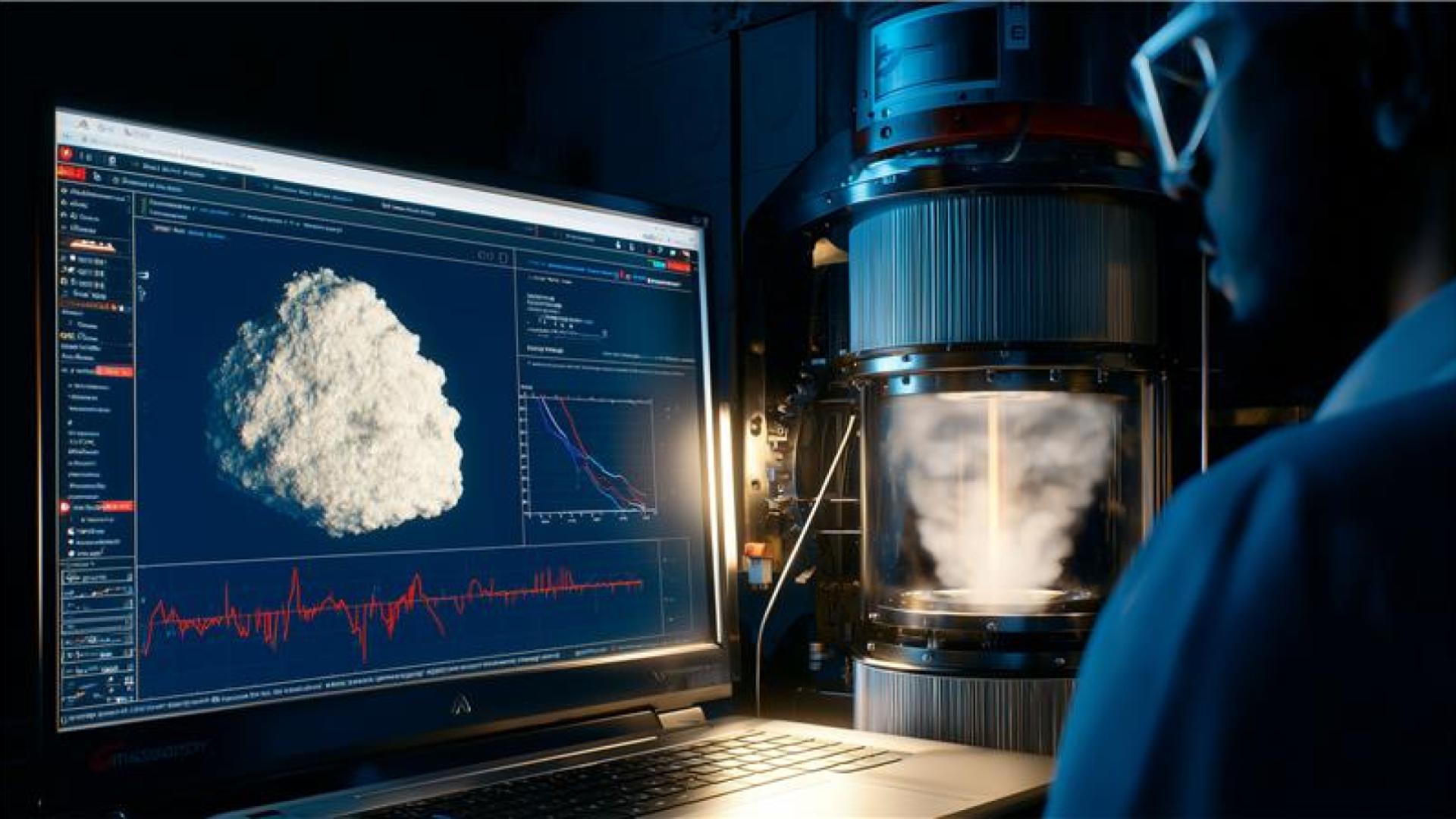
Constitution
Stable and metastable phase diagrams
Phase stability and microstructure are closely related.
The scope includes methods and theories for describing stable and metastable phase diagrams and the resulting microstructures.
Understanding phases and microstructures through thermodynamics, kinetics and CALPHAD.
Chair
Constitution
Phase stability and microstructure are closely related.
The scope includes methods and theories for describing stable and metastable phase diagrams and the resulting microstructures.
Thermodynamics
Measured data provide the basis for reliable models.
Thermal analysis, calorimetry and Knudsen effusion mass spectrometry are among the methods used to determine thermodynamic properties of individual phases and materials.
Kinetics
Diffusion and tracer experiments provide access to time-dependent processes.
Diffusion-couple studies and tracer experiments provide data on materials kinetics and complement the thermodynamic description of phase formation.
Experimental data are transferred into thermodynamic models and computer databases that enable calculations based on the CALPHAD approach. This makes it possible to describe phase stability and equilibrium microstructures in multicomponent materials.
Sharp-interface calculations and phase-field simulations extend these models to include the temporal evolution of microstructures. Linking experiment, modelling and simulation supports microstructure and property optimisation in line with Integrated Computational Materials Engineering.
Cooperation
The committee works with established networks in the field.
The committee cooperates closely with the Alloy Phase Diagram International Commission (APDIC), the Scientific Group Thermodata Europe (SGTE) and the Materials Science International Team (MSIT).
Professional development
Regular formats combine scientific discussion and professional development.
The Expert Committee organises symposia at international conferences as well as summer schools and workshops for professional development.
Dates 2026
Two dates for committee members in September and October 2026.
20–24 September 2026: 20th TOFA, Slovenia.
29 September–1 October 2026: MSE Symposium “Computational and experimental thermodynamics and kinetics of materials”, Darmstadt, Germany.
Materials constitution is investigated by combining experimental and analytical methods with thermodynamic-kinetic calculations. Thermal analysis, electron microscopy with local chemical analysis and X-ray methods contribute to the determination of phase diagrams. Calorimetry and Knudsen effusion mass spectrometry provide thermodynamic data, while diffusion-couple studies and tracer experiments provide insight into materials kinetics.
These data form the basis for thermodynamic models and computer databases used in CALPHAD calculations. Together with sharp-interface calculations and phase-field simulations, they support the optimisation of microstructures and properties in modern structural and functional materials. The Expert Committee discusses these topics in the context of Integrated Computational Materials Engineering (ICME) and works closely with APDIC, SGTE and MSIT. It regularly organises symposia at international conferences, as well as summer schools and workshops.