Expert Committee
Combining pore structure and material properties with purpose.
Chair

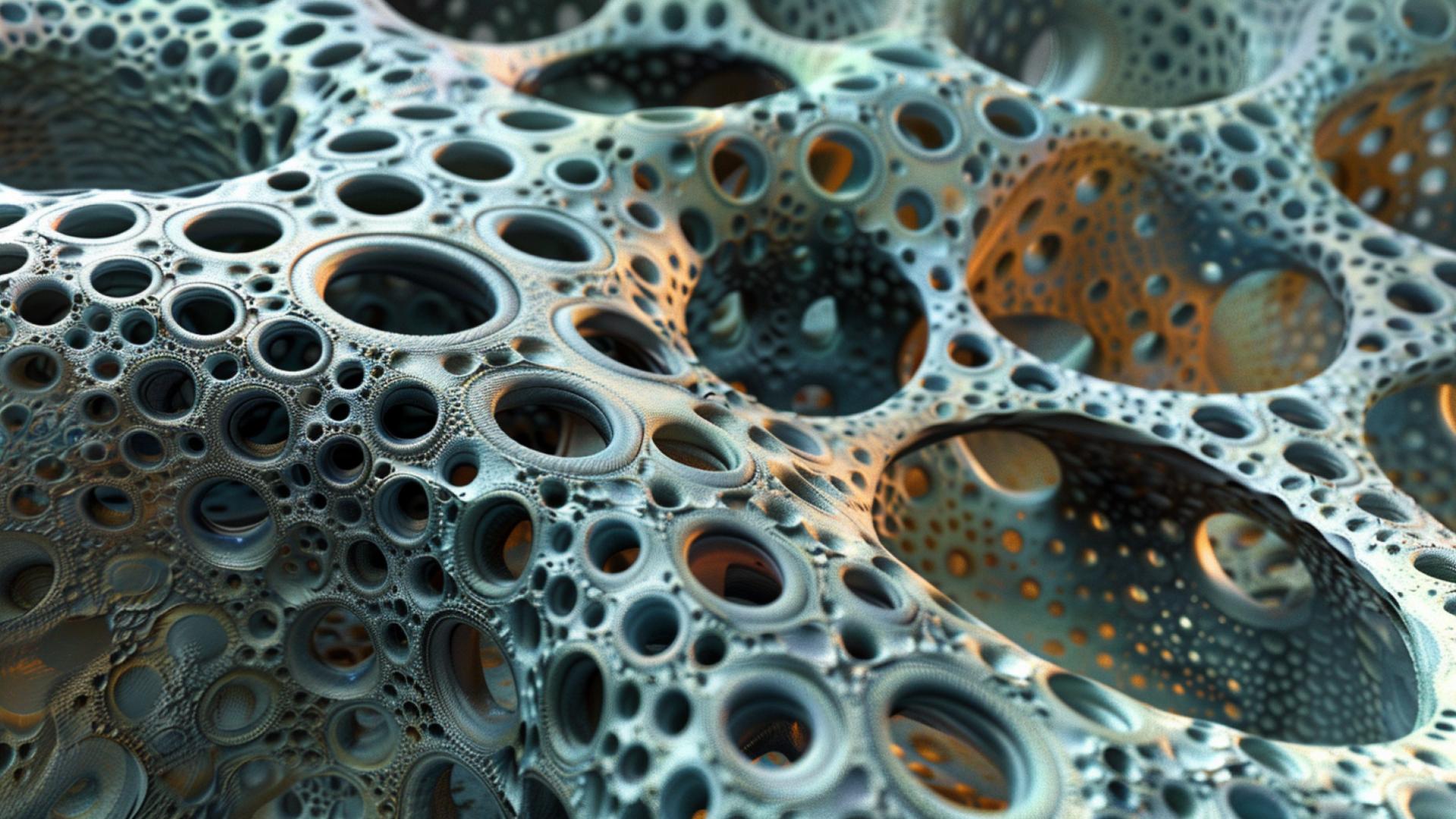
The DGM Expert Committee Cellular Materials addresses materials with open or closed pores, along with their production, functionalization, and application. It brings together experts from industry, non-university research institutes, universities of applied sciences, and universities across material classes.
Its work covers characterization, simulation, and modelling as well as application-relevant testing. The focus is on how pore structure and material composition jointly determine properties.
Structure, process, and application
Pore structure
Pore size, shape, and distribution shape the property profile.
Production
Production processes should enable homogeneous cells and pores at different size scales.
Characterization
Structure and function must be described and assessed reliably.
Functionalization
Functions arise from structure, material, and the interaction of different components.
Application fields
In lightweight construction and in mechanical, plant and equipment engineering, cellular materials can provide property combinations arising from the connection of material and pore structure. Energy and environmental technology are further application fields under consideration.
For heat storage and heat recovery, surface functionalization, adjustable thermal and electrical conductivity, and low pressure loss during flow are relevant. The filtration of molten metals focuses on active and reactive ceramic filters with high surface functionality and high-temperature stability. Cellular materials with integrated heat reflectors offer further approaches for building insulation.
Development and transfer
Integrating cellular materials into new applications requires an understanding of complex composite and tailored microstructures as well as application-specific interface and surface design. Further questions concern adhesion, corrosion, failure, and material behaviour under multiaxial stress states. Auxetic and nanocellular materials are also part of this scope.
Development includes processes for more homogeneous and reproducible cell structures, the generation of pores at different size scales within one material, and functionalization strategies. Further topics are near-net-shape production suitable for series manufacturing, precise machining, and particle foam technology.
Exchange across material classes connects research and application and provides a technical basis for joint research projects.
Cellular materials contain a high proportion of open or closed pores in different shapes and sizes. Combined with inherent material properties, these structures can produce property profiles that cannot be achieved with dense materials. This is particularly relevant for complex multi-material compositions.
Applications include lightweight construction, mechanical, plant and equipment engineering, and energy and environmental technology. For heat storage and heat recovery, relevant features include functionalizable surfaces, adjustable thermal and electrical conductivity, and low pressure loss during flow. Further approaches include ceramic filters for molten metals and cellular materials with integrated heat reflectors for building insulation.
New applications require an understanding of the function and failure of complex composite and tailored microstructures. This includes interface and surface design, adhesion, corrosion, failure mechanisms, and behaviour under multiaxial stress states. Reproducible cell structures, pores at different size scales, and production and machining processes suitable for series production are equally important.
The Expert Committee aims to make cellular materials more reliable and to enable the targeted use of their properties in technical applications.
Cooperation across material classes provides the basis for initiating and carrying out joint research projects.