![[Translate to English:]](/fileadmin/_processed_/a/3/csm_DGM-Logo-Buchstaben-blau_cf0fc5a057.png)
![[Translate to English:]](/fileadmin/DGM/DGM/Logo/DGM-Logo-Buchstaben-blau.png)
CalPhaD Coffee Lecture – SGTE - Scientific Group Thermodata Europe
The CalPhaD Coffee Lecture is a new discussion forum within the DGM Expert Committee on Thermodynamics. Invited speakers will present methods that may be unfamiliar to traditional CalPhaD experimentalists but hold potential for integration into established approaches.
In addition, the series will explore current challenges and emerging topics that provide fresh impulses for the CalPhaD community.
At this Coffee Lecture, Dr.-Ing. Alexander Walnsch, GTT-Technologies, and Dr. Alexander Pisch, Laboratoire de Science et Ingénerie des Matériaux et Procédé (SIMaP), Saint Martin d’Hères (France), will give a presentation on: "Third generation Calphad modeling of elements, compounds and solutions".
Everyone interested is warmly invited to participate and contribute to the exchange.
Further information on the DGM Expert Committee on Thermodynamics.
Chair
-
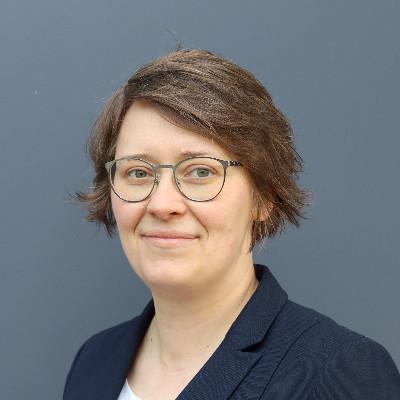 PD Dr.-Ing. habil. Stephanie LippmannFriedrich Schiller University Jena
11 Feb 2026 (Wed)
The CALPHAD method has advanced considerably since the early development of Gibbs energy descriptions for stable and metastable elements and phases by Kaufman and Bernstein in 1970. While first-generation models of the Gibbs energy introduced relative lattice stabilities, second-generation descriptions such as the SGTE dataset standardised elemental reference functions for various solid modifications and the liquid. Despite their usefulness, these formulations usually are simple polynomial heat-capacity expressions, which restrict physical interpretability and lead to inaccurate extrapolations at 0 K and at very high temperatures.
Therefore, the current drive to develop “third-generation” Calphad descriptions should address these issues by describing the thermodynamic properties of elements and compounds using functions based on the Einstein model for the heat capacity with corrections for anharmonic contributions. For solid phases, single- or multi-Einstein approaches are used to model heat capacities and Gibbs energies, even those with complex vibrational spectra (e.g. C, CaO). The critical point remains the high temperature behavior of the Gibbs energy of solid phases far beyond their melting point. Hereby, strategies for high-temperature extrapolation, including different functional forms and the equal-entropy criterion, are also discussed.
For liquids, the two-state model is introduced, where a physically motivated functional form governs the behaviour of enthalpy and heat capacity. This representation establishes consistent links between thermodynamic properties and dynamic phenomena, such as the glass transition, as demonstrated for B₂O₃.
Extension to solutions is achieved through the interaction of end-member Einstein contributions, as illustrated for the binary Al-Zn and Fe-Mn-Ti ternary systems. Furthermore, an alternative way to generate more robust high-temperature extrapolations is presented: the explicit treatment of thermal vacancies in low- and high-melting metallic systems. Finally, the remaining challenges to the widespread adoption of these methods and possible solutions to these challenges are briefly discussed.
-
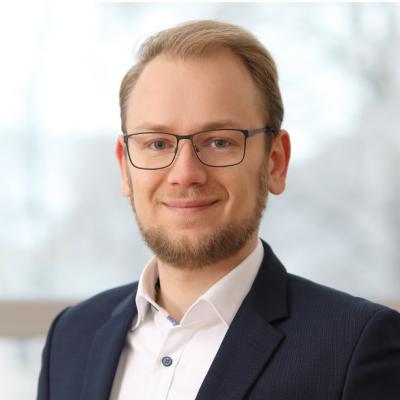 Dr.-Ing. Alexander WalnschGTT-Technologies
 -
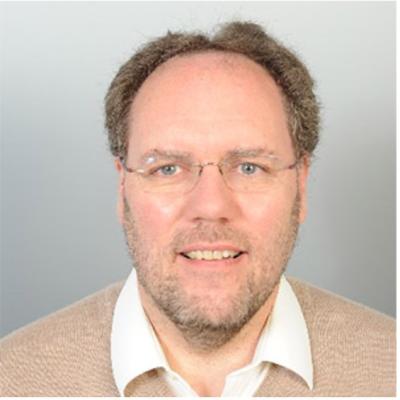 Dr. Alexander PischSIMaP Science and Engineery of Materials and Processes
Online participation takes place via the DGM’s browser-based event platform. For access, we recommend using the latest browser versions of Google Chrome, Mozilla Firefox, Safari, or Microsoft Edge. Registered participants will receive all access information in advance by email. For the best experience, we also recommend installing the latest version of ZOOM on your device.
The platform will be activated shortly before the event. Please log in to the event platform using your DGM user account. If you have forgotten your password, you can generate a new one via the “Forgot password” option. The event will be recorded.
The instructional video for the DGM event platform guides you through all available functions.
Contact person
Sign up for our newsletter
Subscribe to our newsletter for regular updates about materials science topics!
After subscribing, you will receive an email from us with a confirmation
link.
Only after clicking this link your registration is completed.