![[Translate to English:]](/fileadmin/_processed_/a/3/csm_DGM-Logo-Buchstaben-blau_cf0fc5a057.png)
![[Translate to English:]](/fileadmin/DGM/DGM/Logo/DGM-Logo-Buchstaben-blau.png)
CalPhaD Coffee Lecture – TEMPUS and EML: Electromagnetic levitation in microgravity
The CalPhaD Coffee Lecture is a new discussion forum within the DGM Expert Committee on Thermodynamics. Invited speakers will present methods that may be unfamiliar to traditional CalPhaD experimentalists but hold potential for integration into established approaches.
In addition, the series will explore current challenges and emerging topics that provide fresh impulses for the CalPhaD community.
At this Coffee Lecture, Dr. Stephan Schneider, DLR, will give a presentation on: "TEMPUS and EML: Electromagnetic levitation in microgravity".
Everyone interested is warmly invited to participate and contribute to the exchange.
Further information on the DGM Expert Committee on Thermodynamics.
Chair
-
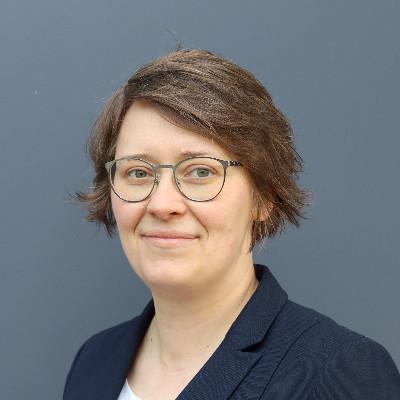 PD Dr.-Ing. habil. Stephanie LippmannFriedrich Schiller University Jena
04 Mar 2026 (Wed)
Tempus and EML are two electromagnetic levitation facilities in microgravity on parabolic flight and ISS as platform. Electromagnetic levitation allows to process materials containerlessly and thus process reactive materials and also reach the metastable state of the undercooled melt. In microgravity heating and positioning can be decoupled and the fluid flows in the sample induced by the heater can be reduced or controlled. As the method uses eddy currents induced from the coil in the sample the sample has to be electrically conductive, a metal or (doped) semiconductor. The facilities allow the investigation of the solidification by recording the solidification process with high speed cameras and analysis of the post mortem microstructure and the measurement of thermophysical properties as surface tension, viscosity, density & electrical conductivity. While in TEMPUS the microgravity time is not sufficient to perform specific heat measurement these can be done on the ISS as the experiments can be performed over a longer time. Both facilities measure the temperature contactlessly by pyrometry and utilize a high-speed camera from the radial view and additionally a second camera observing axially from the top. In TEMPUS additionally an IR camera can be equipped. Both facilities can be operated over a large temperature regime allowing to heat up the sample up to 2100°C and thus can process a broad range of material classes: Glass formers, steels, Ni-based superalloys, Ti alloys, model systems for solidification etc….In the presentation an overview of the performance and evaluation of the experiments as well as information how scientists can perform measurements in the facilities will be given.
-
 Stephan SchneiderGerman Aerospace Center (DLR)
Online participation takes place via the DGM’s browser-based event platform. For access, we recommend using the latest browser versions of Google Chrome, Mozilla Firefox, Safari, or Microsoft Edge. Registered participants will receive all access information in advance by email. For the best experience, we also recommend installing the latest version of ZOOM on your device.
The platform will be activated shortly before the event. Please log in to the event platform using your DGM user account. If you have forgotten your password, you can generate a new one via the “Forgot password” option. The event will be recorded.
The instructional video for the DGM event platform guides you through all available functions.
Contact person
Sign up for our newsletter
Subscribe to our newsletter for regular updates about materials science topics!
After subscribing, you will receive an email from us with a confirmation
link.
Only after clicking this link your registration is completed.