
CalPhaD Coffee Lecture – CALPHAD-integrated Defect Thermodynamics
When
20 Jan 2027 13:00 - 14:00
Where
Online
Language
English
The CalPhaD Coffee Lecture is a discussion forum within the DGM Expert Committee on Thermodynamics. Invited speakers will present methods that may be unfamiliar to traditional CalPhaD experimentalists but hold potential for integration into established approaches.
In addition, the series will explore current challenges and emerging topics that provide fresh impulses for the CalPhaD community.
At this Coffee Lecture, Prof. Dr. Reza Darvishi Kamachali, University Professor, Institute of Materials Physics, University of Münster, and Head of Division 5.5, Federal Institute for Materials Research and Testing (BAM), Berlin, Germany will give a presentation on: "CALPHAD-integrated Defect Thermodynamics".
Everyone interested is warmly invited to participate and contribute to the exchange.
Additional dates in the CalPhaD Coffee Lecture series are already scheduled, and registration is open. Explore the upcoming lectures and register for the sessions that interest you:
21.10.2026: Defect Phases in CALPHAD - From Bulk to Microstructure
18.11.2026: From Heat Capacity to Gibbs Energy: Experimental Thermodynamics of High-Entropy Alloys
16.12.2026: AI Agents in the CALPHAD Workflow: How Agentic Simulation Supports Alloy Design
23.03.2027: Agentic Workflows for Accessible and Reproducible CALPHAD Simulations
Further information on the DGM Expert Committee on Thermodynamics.
Chair

Prof. Dr.-Ing. Stephanie Lippmann
Friedrich Schiller University Jena
Program
20 Jan 2027 (Wed)
PD Dr.-Ing. habil. Stephanie Lippmann
Friedrich Schiller University Jena
The history of CALPHAD is a history of making thermodynamics computationally useful with two pillars: Assessed descriptions of multi-component phases’ equilibria and their coupling with diffusion and phase transformations. This development invites a further step: extending the thermodynamic description from bulk phases to the defects within a microstructure.
Microstructure defects can adopt compositions and phase states that differ markedly from the surrounding bulk, yet these local states are rarely accessible through conventional phase diagrams. In this talk, I will present the CALPHAD-integrated density-based thermodynamic theory and phase-field framework (DPF). A coarse-grained description of atomic density connects the structural departure from the bulk to the local free energy, while retaining assessed CALPHAD thermodynamic information. Connections to atomistic structures and energetics will be discussed.
Applications illustrate what this extension adds to materials design, from grain boundary phase diagrams to co-segregation maps for chemically complex materials. We review successful applications in steels, Al alloys and other alloying systems. The outlook toward Assessing Microstructure Phase Maps, my ERC Consolidator Grant AMASE, will be presented. We discuss how defect thermodynamics can provide a foundation for the next generation of CALPHAD software and tools, connecting thermodynamic databases, atomistic information and microstructure simulation.
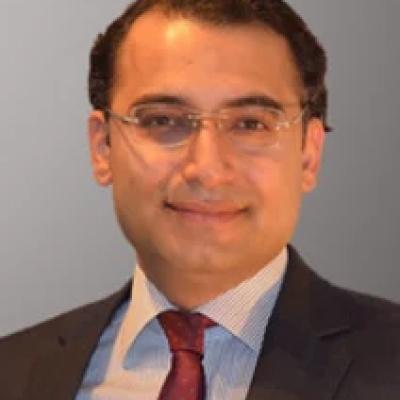
Prof. Dr. Reza Darvishi Kamachali
Bundesanstalt für Materialforschung und -prüfung (BAM) and University of Münster, Germany
Prof. Dr.-Ing. Stephanie Lippmann
Friedrich Schiller University Jena