Short Webinar
Chair

The CalPhaD Coffee Lecture is a discussion forum within the DGM Expert Committee on Thermodynamics. Invited speakers will present methods that may be unfamiliar to traditional CalPhaD experimentalists but hold potential for integration into established approaches.
In addition, the series will explore current challenges and emerging topics that provide fresh impulses for the CalPhaD community.
At this Coffee Lecture, Prof. Hiroyuki FUKUYAMA, Institute of Multidisciplinary Research for Advanced Materials (IMRAM), Tohoku University, Sendai, Japan, will give a presentation on: "Pseudo-Binary Phase Diagram of Stainless Steel 316L– B4C: Experiments and CALPHAD Modeling".
Everyone interested is warmly invited to participate and contribute to the exchange.
Further information on the DGM Expert Committee on Thermodynamics.
13:00 – 14:00
13:00 – 13:05
lecture
13:05 – 13:35
lecture
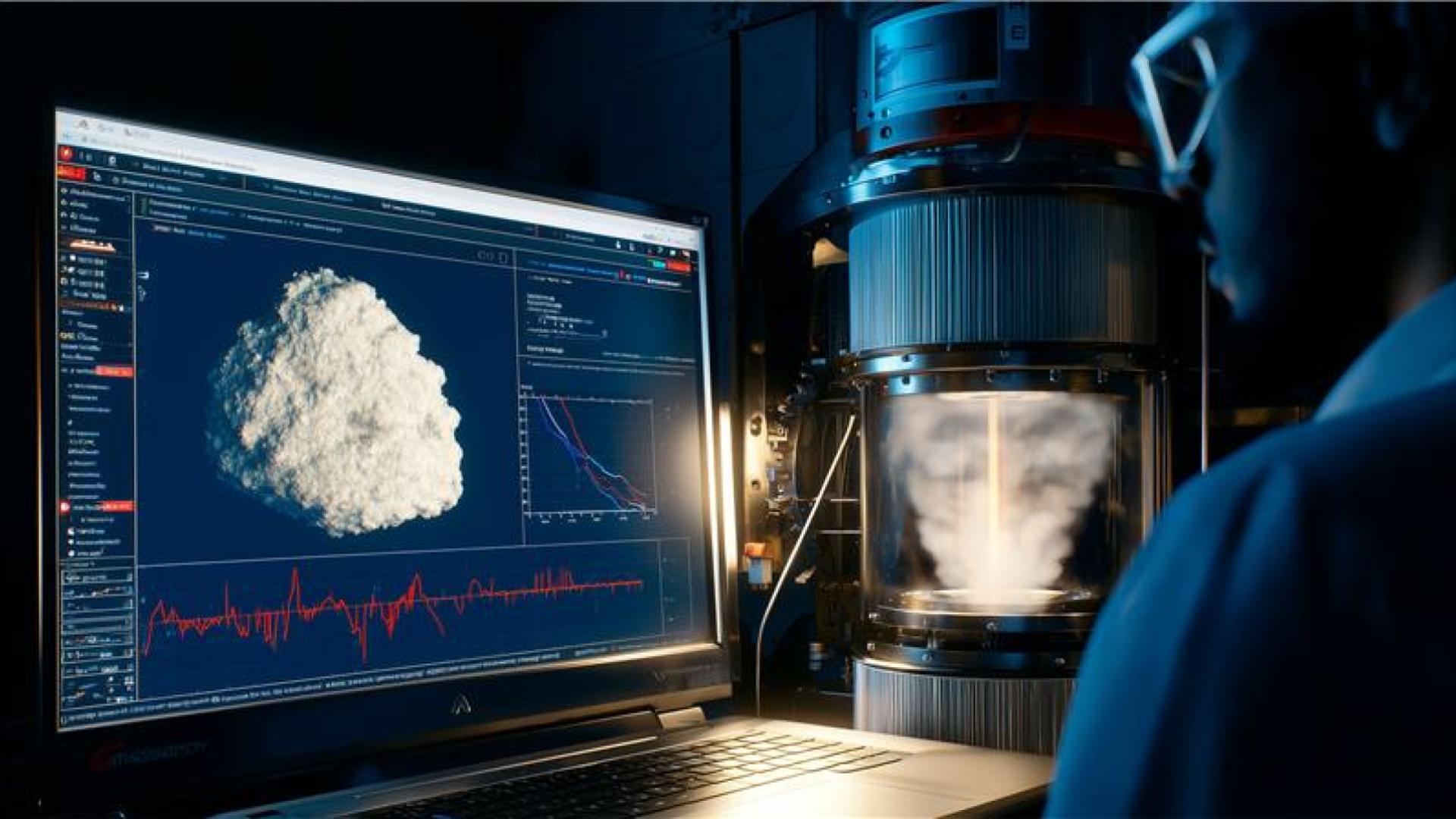
During core disruptive accidents in sodium-cooled fast reactors (SFRs), the eutectic interaction between B4C control rods and SS316L cladding causes melt relocation and flow channel blockage. To provide reliable thermodynamic input for severe accident analysis codes, this study systematically investigates the phase equilibria and solidification behavior of the SS316L–B4C pseudo-binary system up to 9.2 mass% B4C and 1800 K using differential scanning calorimetry (DSC) and static-magnetic-field hybrid electromagnetic levitation (EML) with rapid quenching.
In this talk, I present the newly established experimental phase diagram and provide a comprehensive comparison with CALPHAD calculations using the TCFE15 database. While both approaches capture the overall eutectic shape—with an experimentally determined eutectic point at 3.0 ± 0.2 mass% B4C and 1486 ± 5 K—and the sequence of primary crystallization phases (g-Fe orthorhombic Cr(Fe)2B(C) tetragonal Fe(Cr)2B(C)), critical discrepancies emerge. Specifically, the experimental liquidus and solidus boundaries are systematically lower than the CALPHAD predictions by up to 80 K and 70 K, respectively. Additionally, the experimental stability range of Cr(Fe)23C(B)6 is notably broader, and a four-phase region (L + Cr(Fe)2B(C) + Fe(Cr)2B(C) + γ-Fe) is experimentally observed between 1327 and 1473 K. I will discuss these similarities and discrepancies, highlighting the current limitations of existing thermodynamic databases for multicomponent metal–boron/carbon systems and outlining potential pathways for database optimization.
13:35 – 13:55
Discussion
13:55 – 14:00
lecture
Prof. Dr.-Ing. Stephanie Lippmann
Friedrich Schiller University Jena
Online participation takes place via the DGM’s browser-based event platform. For access, we recommend using the latest browser versions of Google Chrome, Mozilla Firefox, Safari, or Microsoft Edge. Registered participants will receive all access information in advance by email. For the best experience, we also recommend installing the latest version of ZOOM on your device.
The platform will be activated shortly before the event. Please log in to the event platform using your DGM user account. If you have forgotten your password, you can generate a new one via the “Forgot password” option. The event will be recorded.
The instructional video for the DGM event platform guides you through all available functions.