![[Translate to English:]](/fileadmin/_processed_/a/3/csm_DGM-Logo-Buchstaben-blau_cf0fc5a057.png)
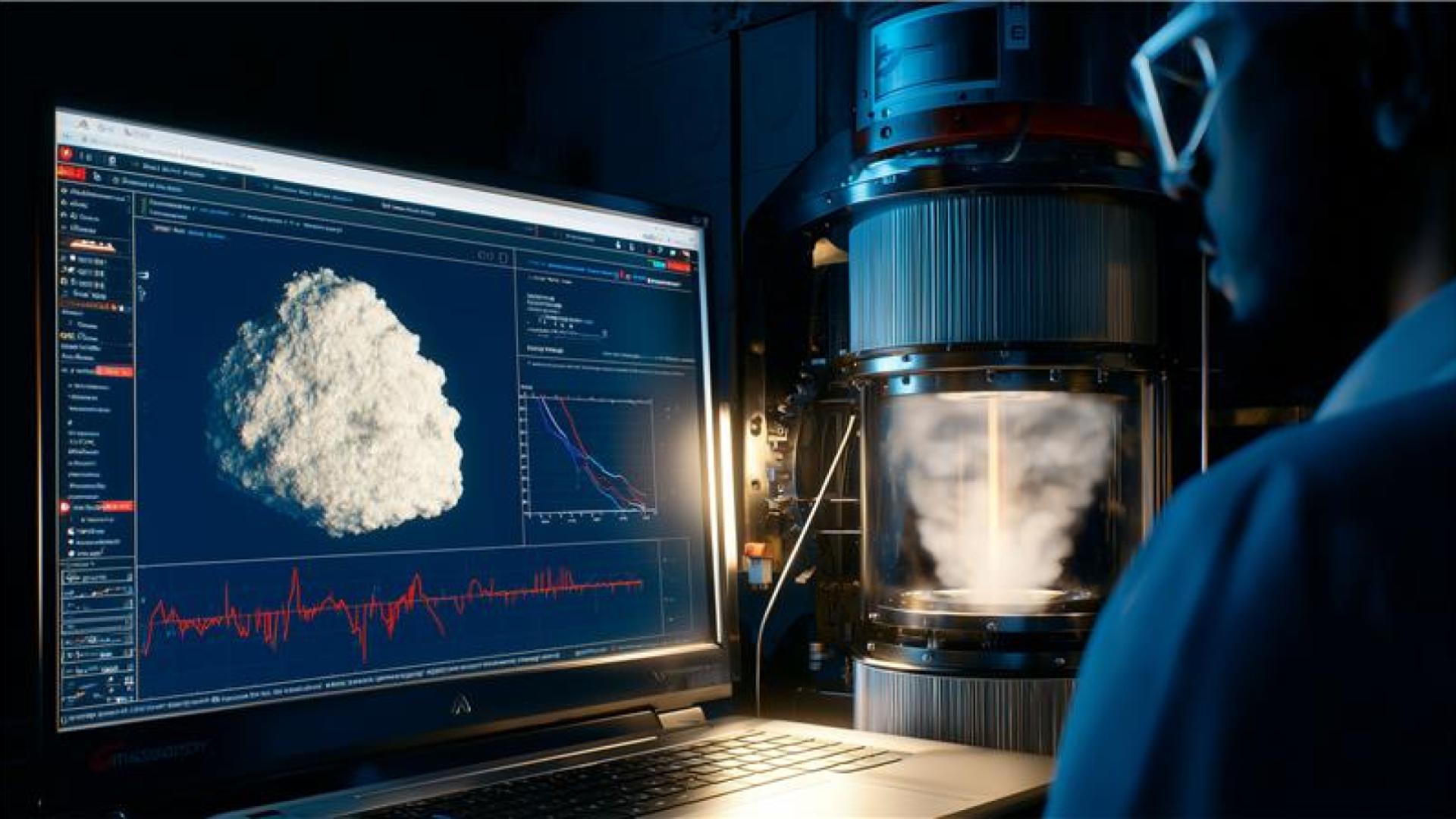
CalPhaD Coffee Lecture – High-Throughput CALPHAD for Sustainable Materials Design in the Age of AI
When
15 Apr 2026 13:00 - 14:00
Where
Online
Language
English
The CalPhaD Coffee Lecture is a new discussion forum within the DGM Expert Committee on Thermodynamics. Invited speakers will present methods that may be unfamiliar to traditional CalPhaD experimentalists but hold potential for integration into established approaches.
In addition, the series will explore current challenges and emerging topics that provide fresh impulses for the CalPhaD community.
At this Coffee Lecture, Dr. Irina Roslyakova, GTT-Technologies, Herzogenrath, will give a presentation on: "High-Throughput CALPHAD for Sustainable Materials Design in the Age of AI".
Everyone interested is warmly invited to participate and contribute to the exchange.
Further information on the DGM Expert Committee on Thermodynamics.
Chair
Prof. Dr.-Ing. Stephanie Lippmann
Friedrich Schiller University Jena
Program
15 Apr 2026 (Wed)
PD Dr.-Ing. habil. Stephanie Lippmann
Friedrich Schiller University Jena
The transition toward sustainable materials demands faster and more reliable design strategies capable of balancing performance, resource efficiency, and environmental impact. High-throughput CALPHAD calculations, when integrated with AI-based methods, offer a promising pathway to meet these challenges.
This lecture presents an integrated workflow that combines HT-CALPHAD data generation with automated data processing, machine learning property models, and multi-objective optimization. By embedding thermodynamic consistency into data-driven pipelines, HT-CALPHAD enables efficient pre-screening of candidate materials, supports informed design decisions, and enhances the reliability of AI-driven predictions.
Case studies demonstrate how this combined approach accelerates sustainable materials design by reducing experimental and computational effort while maintaining physical interpretability. The talk concludes with perspectives on how HT-CALPHAD and AI together can shape future materials discovery frameworks focused on sustainability.

Dr. Irina Roslyakova
GTT-Technologies
PD Dr.-Ing. habil. Stephanie Lippmann
Friedrich Schiller University Jena