![[Translate to English:]](/fileadmin/_processed_/a/3/csm_DGM-Logo-Buchstaben-blau_cf0fc5a057.png)
Why You Should Attend Hybrid 2025:
An Exceptional Venue:
The conference takes place at Space Expo Noordwijk, located next to the European Space Agency’s ESTEC research center. This setting not only offers an inspiring backdrop but also allows participants to engage with space technology up close — whether by walking through an ISS model, examining a real meteorite, or exploring ESA’s latest research projects.
Comprehensive Program:
From Fundamentals to Applications
Hybrid 2025 covers the entire lifecycle of hybrid materials, including:
- Fundamentals and characterization
- Innovative design and manufacturing
- Performance analysis and operational challenges
Bringing together leading researchers and industry pioneers, the conference fosters discussion on how hybrid materials can drive new solutions across sectors.
Plenary Lectures by Leading Experts
Attendees will gain insights from Dr. Tommaso Ghidini (ESA) and Dr. Thomas Beumler (Airbus), who will share the latest developments in hybrid materials for aerospace applications — a field where lightweight structures, multi-material integration, and digital design tools are transforming engineering possibilities.
Connecting Academia and Industry:
Networking is a key element of Hybrid 2025. The conference dinner offers a setting for high-level discussions and new collaborations, bringing together professionals from research institutions, industry, and emerging startups in hybrid materials technology.
Exclusive Guided Tour at ESA ESTEC:
Participants will have the opportunity to visit Europe’s largest space research center — where ESA missions take shape and cutting-edge materials are developed. This guided tour provides a rare behind-the-scenes look at the future of space materials and engineering.
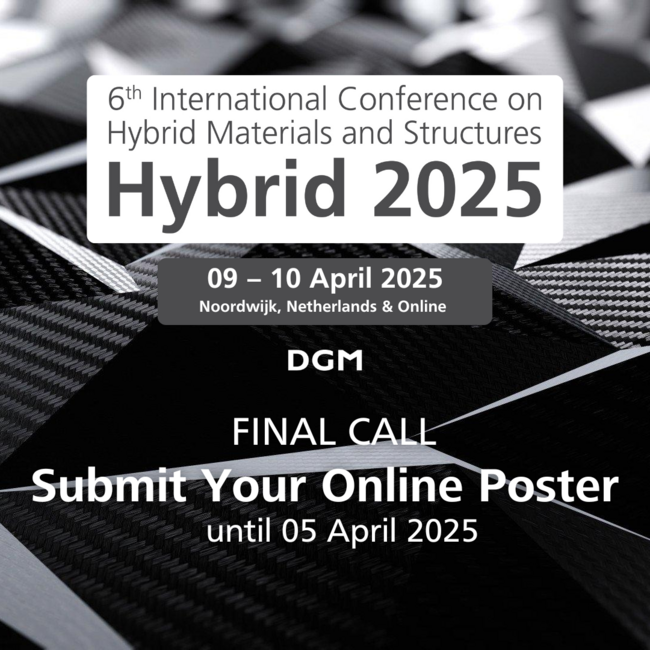
Online Poster Submission Open Until 05 April 2025:
Are you researching hybrid materials and their applications? Poster submissions remain open until 05 April 2025. This is an excellent chance to connect with experts, receive feedback, and discuss innovations shaping the future of materials science.
Hybrid 2025 welcomes you to Noordwijk, the Netherlands, or online. Join us in exploring the next generation of hybrid materials!