![[Translate to English:]](/fileadmin/_processed_/a/3/csm_DGM-Logo-Buchstaben-blau_cf0fc5a057.png)
![[Translate to English:]](/fileadmin/DGM/DGM/Logo/DGM-Logo-Buchstaben-blau.png)
Thermodynamics, Kinetics and Materials Constitution
The physical, chemical and mechanical properties of materials are essentially determined by its microstructure which is formed during processing. For tailoring materials and processes, knowledge the thermodynamics and kinetics of phase transformations is required. The difficulties to understand microstructure formation increases with the number of components and phases, and most of the technically applied metallic alloys and ceramics are multicomponent and multiphase materials. The “CALculation of PHAse Diagram” method (CALPHAD for short) is a versatile tool for tackling fundamental and applied problems in materials science related to microstructure formation. The committee considers itself as the representative of the CALPHAD community in Germany and focuses the scientific discussion on methods and theories for describing stable and metastable phase diagrams and microstructures.
Relevant dates for members of the expert committee in 2026:
- 14.01.2026: CalPhaD Coffee Lecture "Synchrotron X-ray Hierarchical Imaging of Laser Additive Manufacturing"
- 29.01.2026: Committee meeting (Fachausschusstreffen) in person at Ringberg Castle and online
- 25.-30.01.2026: 40. MSIT Workshop "International Seminar on the Evaluation of Heterogeneous Multicomponent Equilibria“ auf Schloss Ringberg, Germany
- 11.02.2026: CalPhaD Coffee Lecture "SGTE - Scientific Group Thermodata Europe"
- 04.03.2026: CalPhaD Coffee Lecture "TEMPUS and EML: Electromagnetic levitation in microgravity"
- 7.-12.6.2026: LIII CALPHAD in Québec City, Canada
- 20.-24.9.2026: 20th TOFA in Slowenia
- 29.9.-1.10.2026: MSE-Symposium “Computational and experimental thermodynamics and kinetics of materials”, Darmstadt, Germany
Chair
-
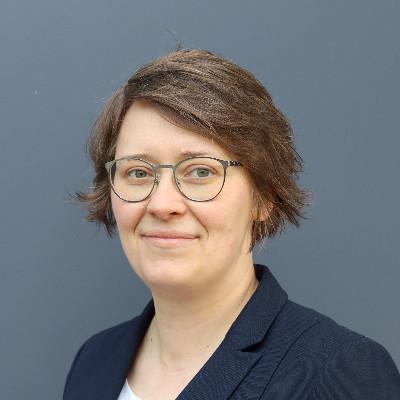 PD Dr.-Ing. habil. Stephanie LippmannFriedrich Schiller University Jena
-
Short Webinar
04 Mar 2026 13:00 - 14:00
CalPhaD Coffee Lecture – TEMPUS and EML: Electromagnetic levitation in microgravity
-
Short Webinar
15 Apr 2026 13:00 - 14:00
CalPhaD Coffee Lecture – High-Throughput CALPHAD for Sustainable Materials Design in the Age of AI
-
Congress & Exhibition
13 Sep 09:00 - 17 Sep 2026 15:00
ICAA20 in 2026
-
Congress & Exhibition
29 Sep 09:00 - 01 Oct 2026 17:00
MSE 2026
-
Training Course
04 Nov 08:30 - 06 Nov 2026 16:00
Nachhaltige Werkstofftechnik der Metalle
- Determining and addressing industrial and scientific issues in the field of materials thermodynamics and kinetics as well as heterogeneous equilibria (constitution).
- Development of scientifically based thermodynamic-kinetic models for the description of phase formations, microstructures, and properties of materials.
- Further development of experimental methods for the determination of thermodynamic and kinetic data as well as software development (e.g. Calphad, phase field method).
- Initiation of research and development projects: joint projects between universities, research institutes, and industry.
- Exchange of experience between working groups active in the field of the Expert Committee and national and international network building.
For efficient elucidation of the material constitution (heterogeneous equilibria, phase diagrams), experimental-analytical methods are ideally combined with thermodynamic-kinetic calculations. The stable and often also metastable equilibrium structures of modern structural and functional materials can be derived from the results. Experimental core methods such as thermal analysis, electron microscopy with chemical microdomain analysis, and X-ray imaging are used to elucidate the phase diagrams. The thermodynamic properties of individual phases and materials can be determined, for example, by calorimetry and Knudsen effusion mass spectrometry. Diffusion pair studies and tracer experiments are used to elucidate material kinetics.
The results of these analytical methods are input variables for the creation of thermodynamic models and of computer databases that enable calculations using the CALPHAD method (CALcualtion of PHAse Diagrams). In combination with e.g. "sharp interface" calculations and phase-field simulations, the time-saving and application-relevant microstructure and property optimization of modern materials is supported. This also accelerates the achievement of the goals of "Integrated Computational Materials Engineering" (ICME). The DGM Expert Committee discusses the listed topics and also cooperates closely with the "Alloy Phase Diagram International Commission" (APDIC), the "Scientific Group Thermodata Europe" (SGTE), and the "Materials Science International Team" (MSIT). Symposia at international conferences as well as summer schools and workshops for further education are organized regularly. More information on the annual international conference can be found at this link: https://calphad.org/
Sign up for our newsletter
Subscribe to our newsletter for regular updates about materials science topics!
After subscribing, you will receive an email from us with a confirmation
link.
Only after clicking this link your registration is completed.